
Separate the urgent bill from the borrowing decision
Start with the bill, its exact deadline and the amount needed to prevent the immediate consequence. Then subtract cash already available, income arriving before that deadline and any payment extension already offered. That result is the gap. It is often smaller than the amount an applicant first thinks is needed, which matters because every borrowed dollar joins the repayment schedule.
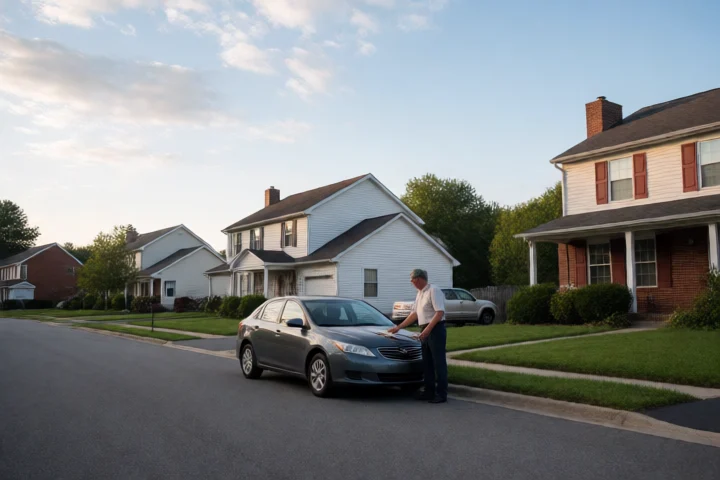
A short calculation keeps the decision concrete: urgent expense minus available cash minus income available before the due date equals the amount still uncovered. Suppose a $430 vehicle repair is due Friday, $125 is available, and $175 arrives before Friday after essential spending. The remaining gap is $130, not $430. A repayment source also needs a name and a date: next paycheck after ordinary bills, a confirmed payment arrangement, or another identified source. “I’ll work it out” has never cleared a payment. It is a hope wearing a tie.
Virginia permits payday loans of up to $2,500, but that statutory ceiling is not a household budget. A borrower whose next available income covers only a $130 gap has no financial reason to treat a larger offer as a solution. Write down a fallback as well: the bill arrangement, assistance route or expense reduction that applies if the expected income changes.
Apply the numbers to plausible household situations
In one hypothetical Suffolk household, a car repair threatens attendance at work. The repair shop needs $360 before the next shift cycle, while the household has $140 after groceries and fuel. The actual gap is $220.
Income arrives eight days later, but that paycheck already carries rent and a utility payment. The household compares the repair deadline with a payment arrangement from the shop and calculates what remains after those routine bills.
Borrowing the full repair bill would turn a $220 shortage into a larger scheduled obligation. A smaller amount, a repair-shop payment plan, or a delayed portion of the repair changes the repayment test.
Another hypothetical situation involves a medical visit and travel expense totaling $275. The household has $90 available, leaving a $185 gap.
The next income date falls near a regular insurance, phone and grocery cycle. That timing matters because repayment competes with bills already committed from the same deposit.
The household tests whether a provider accepts partial payment and whether the remaining $185 fits after the routine bills. If no room remains, the loan payment creates a second shortfall rather than closing the first one.
A third hypothetical Suffolk budget reflects reduced shift hours: $240 is needed for an essential bill, but only $100 remains after current expenses.
Payroll arrives on schedule, yet the deposit is smaller than the prior month’s. The repayment estimate therefore uses the reduced pay, not the usual paycheck.
A $140 gap still needs a fallback if hours stay low. Assistance screening or a bill-date change may reduce the amount that must be financed.
Compare borrowing with non-loan routes
A bill’s deadline determines which routes deserve attention first. Some alternatives reduce the gap directly; others change the payment date. Neither outcome is glamorous, but both can prevent a short loan from becoming a recurring budget problem.
| Route | Speed | Likely Cost | Eligibility Friction | Risk |
|---|---|---|---|---|
| Payday loan | Depends on lender processing and approval | Interest and permitted fees shown in loan disclosures | Application, lender underwriting and repayment terms | Scheduled payments strain the next budget if income or expenses shift |
| Bill payment arrangement or due-date change | Often depends on the biller’s response | Varies by biller; ask about any late charge or plan fee | Account status and biller policy | An arrangement fails if the revised payment date still exceeds available income |
| Suffolk Department of Social Services or CommonHelp screening | Program and application timing vary | Public-assistance route rather than loan financing | Program rules and application information | Assistance may not meet an immediate deadline, so the biller’s timing still matters |
| Credit-union or community financing category | Institution and application timing vary | Terms depend on the provider and product | Membership, underwriting or program requirements | A payment remains a payment; compare its schedule with the household budget |
Use place-specific facts without guessing
Suffolk is an independent Virginia city, not a city within Suffolk County. That changes the practical referral path: a household seeking local public-support screening should look for the Suffolk Department of Social Services, while statewide benefit applications run through CommonHelp. A search framed around “Suffolk County” risks sending the borrower toward the wrong local-government assumption.
Virginia law requires a payday lender to hold a license under the Payday Lending Act, subject to statutory exceptions, and assigns licensing administration to the State Corporation Commission. Licensing belongs in the comparison because a Suffolk storefront or website address says little about regulatory status. The Commission also provides a complaint route for regulated financial institutions and financial-service companies within its jurisdiction.
For a food, health coverage, cash-assistance or energy-assistance gap, the local agency and CommonHelp address a different problem from a loan: they seek to reduce the expense or provide public support. That distinction is material when the bill itself, rather than a lack of access to credit, drives the shortage.
Virginia State Corporation Commission — official information
Compare the full repayment, not the headline amount
Covered closed-end consumer-credit disclosures include the annual percentage rate, finance charge, amount financed, total of payments, payment schedule and late-payment information. Put those fields side by side for every offer. Virginia permits simple annual interest up to 36 percent and, subject to statutory conditions, a monthly maintenance fee no greater than the lesser of 8 percent of the original loan amount or $25. Fees are not decoration around the loan; they affect the cash required on each due date.
Offers with different schedules become comparable by adding every scheduled payment to reach total repayment, then placing each payment beside the income date that must fund it. A lower individual payment does not answer the affordability question if it appears during a rent-heavy week.
| Comparison Field | Offer One | Offer Two | Why It Matters |
|---|---|---|---|
| Amount financed | Record the cash actually received | Record the cash actually received | This anchors the comparison to the amount available for the bill |
| Total of payments | Add every scheduled installment | Add every scheduled installment | This shows full repayment, beyond the advertised advance |
| Payment schedule | List each due date and amount | List each due date and amount | Income timing determines whether each payment fits |
| Finance charge and fees | Record disclosed interest and each permitted fee | Record disclosed interest and each permitted fee | Charges change the total and the monthly cash demand |
| Late payment and payoff terms | Record the disclosed consequence and payoff process | Record the disclosed consequence and payoff process | These terms govern a missed payment or an earlier exit |
The failure points to identify in advance
Repeat borrowing usually begins with an affordable-looking first payment that leaves too little for the next ordinary expense. Put every payment on the household calendar before signing, including dates that land before rent, utilities, insurance or commuting costs. A late or returned-payment consequence belongs in the same calculation, since the disclosure should state it.
Automatic withdrawal deserves its own reading. Federal electronic-fund-transfer rules generally bar a lender from conditioning credit on repayment by preauthorized electronic fund transfer. A borrower should distinguish a voluntary authorization from language claiming that automatic withdrawal is required for the loan.
Unclear totals, missing payment dates, unexplained fees or a lender identity that cannot be matched to its license are stop conditions. Virginia’s maximum term runs from four to 24 months; an offer that obscures its term makes a repayment comparison impossible.
Virginia State Corporation Commission — official information
Use this checklist to make the decision explicit
- Exact gap recorded: the bill amount, deadline, available cash and income before the deadline produce one stated borrowing need.
- Repayment source identified: each scheduled payment fits after rent, food, utilities, transport and other fixed obligations.
- Lender identity and Virginia licensing status matched through the State Corporation Commission.
- Written disclosure retained: amount financed, annual percentage rate, finance charge, total of payments, payment schedule and late-payment terms appear together.
- Total repayment calculated: every installment and disclosed charge has been added before comparing offers.
- Due dates matched to income dates: the first payment and later payments fit the actual payroll calendar, including reduced-hours scenarios.
- Payoff, cancellation and privacy terms read: the lender’s process for early payoff, any cancellation right stated in the agreement, and use of personal information are clear.
- Fallback named: a bill arrangement, assistance application or other response exists if the expected income does not arrive or the payment no longer fits.
Virginia State Corporation Commission — official information
Official pages used here
- Code of Virginia — Chapter 18: Short-Term Loans — Virginia Legislative Information System
- What are the costs and fees for a payday loan? — Consumer Financial Protection Bureau