
Apply the numbers to plausible household situations
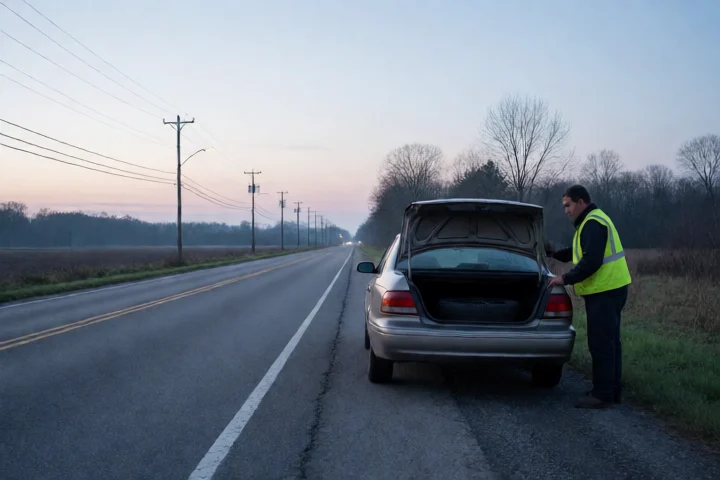
Suppose a Suffolk worker needs a $430 vehicle repair on Tuesday and receives wages the following Friday. Missing the repair would interrupt travel to work, so the expense has a clear deadline. Yet the borrowing amount still depends on the worker’s Friday income after rent, groceries, utilities, and existing automatic withdrawals. If only $280 remains after those obligations, a $430 loan does not close cleanly on the next payday; it creates a second gap of $150 before interest or fees enter the picture.
In another hypothetical household, an unexpected medical visit produces a $260 bill, while the same month also includes a utility payment and routine food costs. The medical bill has urgency, but the entire $260 need not automatically become borrowed principal. A payment arrangement with the provider, a reduced grocery expense through food assistance, or a later billing date changes the amount that must be financed. Small gaps are stubbornly good at pretending to be larger than they are.
A third hypothetical case involves reduced shift hours. Payroll arrives in eight days, but a household has $175 left after fixed bills and needs $310 for fuel, food, and a required work expense. That leaves a $135 shortfall, not a $310 borrowing target. The repayment test follows immediately: projected net pay minus the next round of fixed bills must cover the loan payment without requiring another advance before the following pay date.
Test whether borrowing solves the whole problem
The loan amount offered by a lender is an underwriting figure; the amount needed is a household calculation. Those numbers often diverge. A borrower facing a $500 expense should first subtract cash on hand, income arriving before the deadline, and expense reductions already available. The remainder is the actual gap.
One compact calculation keeps the decision grounded: urgent expense minus available cash minus income available before the bill date minus confirmed outside help equals borrowing need. Then subtract the proposed loan payment from income available on its due date, after the next unavoidable bills. A positive remainder identifies room for repayment. A zero or negative remainder identifies a loan that shifts the shortage forward.
Fallback matters because income timing occasionally changes. A household that relies on overtime, a future shift, or a hoped-for reimbursement has not yet identified a dependable repayment source. In that case, reducing the bill, changing its due date, or finding assistance addresses the cause of the shortage more directly than increasing the loan request.
A local lens for access, work, and payment timing
Suffolk is an independent city in Virginia, not part of Suffolk County. That detail changes where a household should look when food, energy, health coverage, or other basic needs are driving the cash gap: the City of Suffolk Department of Social Services is the local public-benefit access point, while Virginia 211 provides statewide referrals. A search for a purported Suffolk County social-services office sends the household toward an agency structure that does not apply here.
Those routes matter to loan comparison because assistance can reduce the amount borrowed. The Foodbank of Southeastern Virginia and the Eastern Shore serves Suffolk in its regional area, and food support may free cash for a repair, prescription, or utility bill. Virginia 211 also covers food, housing, utility, employment, health, and emergency resource categories.
Those figures apply to that regulated product, not every offer marketed as a cash loan. The State Corporation Commission’s licensee search identifies whether a company presenting itself as a Virginia lender appears in the state’s public records.
Foodbank of Southeastern Virginia and the Eastern Shore · Virginia State Corporation Commission — Licensee Search
Compare the full repayment, not the headline amount
Offers become comparable when every figure is placed on the same ledger. Add every scheduled payment, every disclosed fee, and any amount tied to a payment method. Then place each due date against the same household income calendar. A lower payment is not automatically easier when it appears before wages arrive or runs through more months.
Virginia law permits full or partial prepayment of a regulated short-term loan without a penalty. That feature has value only when the agreement identifies the payoff process and the remaining balance clearly.
| Amount Received | Repayment And Timing | Fees And Charges | Payment Frequency | Exit Flexibility | Route |
|---|---|---|---|---|---|
| Enter cash actually received | Add every scheduled payment and list each due date | List interest, maintenance fees, database fee, and other disclosed charges | Mark weekly, biweekly, semimonthly, or monthly | Record payoff method, partial-payment treatment, and any rescission terms | |
| Enter cash actually received | Add every scheduled payment and list each due date | List interest, maintenance fees, database fee, and other disclosed charges | Mark weekly, biweekly, semimonthly, or monthly | Record payoff method, partial-payment treatment, and any rescission terms | |
| Principal is no more than $2,500 | Term runs from four to 24 months | Read the agreement’s actual payment dates | Full or partial prepayment without penalty; next-business-day rescission rights apply under statutory conditions | Regulated Virginia short-term loan |
Compare borrowing with non-loan routes
A household does not need one route to cover every part of a shortfall. A utility arrangement may handle one bill while food assistance reduces another expense. That split often produces a smaller loan need and a repayment amount that fits the next income date.
| Route | Speed | Likely Cost Category | Eligibility Friction | Risk To Watch |
|---|---|---|---|---|
| Cash loan | Depends on lender process and approval | Interest and fees stated in the agreement | Income, identity, account, and lender requirements vary | Repayment collides with the next round of routine bills |
| Bill payment arrangement | Depends on the provider’s policies and response | Often tied to the provider’s stated terms | Account status and provider approval may matter | A later due date still requires a funding plan |
| Suffolk social services, Virginia 211, or regional food support | Program and referral timing varies | Assistance route rather than loan cost | Program rules and available services apply | Support may address only part of the household gap |
| Participating federal credit-union Payday Alternative Loan | Depends on the credit union and membership status | Product availability and credit-union requirements vary | PAL I membership generally requires one month; PAL II has no one-month membership condition |
Where a manageable payment can become a rollover
Repeat borrowing begins when a payment consumes money already assigned to rent, food, transport, utilities, or another debt. The first loan then becomes part of the next month’s fixed costs. Virginia’s short-term-loan rules restrict refinancing or extending one short-term loan through another short-term loan, yet a household still needs to read the offered product and its payment schedule closely.
Automatic payment authorization deserves the same attention as the rate. The agreement should show the withdrawal amount, date, account involved, late-payment consequences, and returned-payment consequences. Missing or unclear disclosures prevent a real comparison because no one can add an unknown charge to the repayment total.
A borrower who has a dispute with a Virginia-regulated lender has a State Corporation Commission complaint route.
The last review before accepting loan terms
Acceptance should follow a completed comparison, not merely an approval screen. Each point below has a visible pass-or-stop result.
- Actual gap: the requested amount equals the urgent expense after available cash, incoming income, and confirmed assistance are subtracted.
- Repayment fit: each payment date falls after income arrives and leaves money for the next fixed bills.
- Lender identity: the company name appears in the Virginia State Corporation Commission licensee search when it presents itself as a Virginia lender.
- Terms document: the agreement states principal, every payment amount, every due date, interest, fees, and late or returned-payment consequences.
- Full repayment: the sum of scheduled payments and disclosed charges is written beside the cash received.
- Account authorization: any automatic withdrawal amount, date, and account are identified in the agreement.
- Exit terms: payoff instructions, partial-prepayment treatment, and any next-business-day rescission conditions are understood before acceptance.
- Fallback plan: a missed shift, reduced pay, or unexpected bill has a defined response that does not depend on immediate repeat borrowing.