
When repayment timing changes the answer
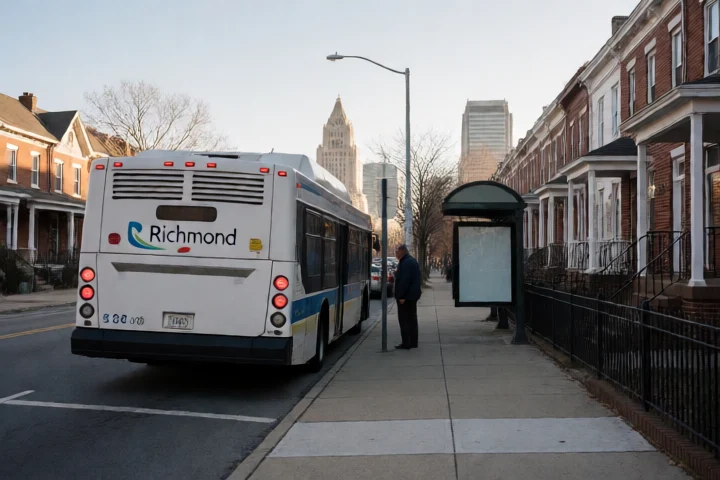
These hypothetical Richmond situations show why the amount requested tells only half the story.
Suppose a Richmond renter is short $300 for rent five days before the due date. Their next verified pay date arrives three weeks later, but that paycheck already covers groceries, utilities, and the next rent installment.
The immediate gap is $300, yet the repayment source is already committed. A loan adds a scheduled debt without creating room in that next paycheck.
A partial payment arrangement with the housing provider or a smaller gap through another route deserves attention before borrowing the full $300.
Suppose a parent faces an urgent childcare charge of $180 and receives pay twice monthly. The following pay date covers the charge, while the pay date after that has room for loan repayment.
Virginia's minimum payday-loan term is at least two pay cycles or two months, whichever is longer. The product's timetable may not match a plan built around one upcoming paycheck.
The parent needs the lender's actual payment dates and amounts before treating the loan as a bridge to the first paycheck.
Suppose a Richmond worker needs $450 after a vehicle disruption changes an expected transit or commuting cost. The next month's income has already been assigned to a medical bill and ordinary household expenses.
An urgent vehicle expense does not turn a later committed paycheck into an available repayment source. Borrowing close to the $500 ceiling leaves little margin for another disruption.
Reducing the bill, moving its due date, or finding assistance for an eligible expense changes the amount that actually needs financing.
Name the expense, deadline, and repayment source
Write four figures on one page: the bill amount, money already available, the payment deadline, and income left after essential obligations on each scheduled repayment date. Bill amount minus available money equals the gap.
Then subtract rent, food, utilities, transport, childcare, existing debts, and other fixed commitments from the income assigned to each loan payment. Money left after those obligations can serve as a repayment source. Treat a plan relying on another loan, an unconfirmed extra shift, or money already committed elsewhere as a warning sign.
Virginia's $500 principal limit is a ceiling, not a recommendation. Borrowing only the documented gap reduces the fee base and the balance that remains outstanding.
The city and county context worth verifying
Richmond is an independent city under Virginia law, not part of a Richmond County. That detail changes the assistance route: a Richmond resident with a household shortfall starts with the City of Richmond Department of Social Services, not a nonexistent Richmond County office.
For an eligible home-energy expense, Virginia's Energy Assistance Program covers fuel, crisis, cooling, and weatherization assistance through local departments of social services. Virginia 211 also provides referrals for food, housing, utility, health, and crisis support. Those routes matter when assistance or a deferred bill reduces the borrowing gap.
Online advertising adds a separate local check. Virginia State Corporation Commission Bureau of Financial Institutions licenses and supervises payday lenders in the state. The legal lender behind an online brand needs identification before its advertised terms are treated as Virginia-regulated payday-loan terms.
Turn loan disclosures into a usable comparison
Put every offer into the same columns. Payment frequency changes the shape of repayment, so compare the sum of every scheduled payment and every disclosed fee, then place each payment beside the income date expected to cover it.
Licensed Virginia payday lenders may charge simple annual interest up to 36 percent, a loan fee up to 8 percent of initial principal, and a monthly maintenance fee up to $10 for each month after the first that a loan remains outstanding. On $500, the 8 percent loan-fee ceiling is $40; a four-month loan also has room for up to three $10 maintenance fees, plus permitted interest. Exact interest depends on the balance and time outstanding.
| Offer | Total Repayment | Payment Dates | Fees And Timing | Exit Flexibility |
|---|---|---|---|---|
| Offer 1 | Principal plus every scheduled interest charge and fee | List each due date beside the pay date funding it | State the loan fee, interest method, maintenance fees, and term | Record early payoff, cancellation, and payment-change terms shown in the disclosure |
| Offer 2 | Add all scheduled payments; do not compare only the cash received | Mark whether any payment falls before available income | Separate first-month charges from later monthly maintenance fees | Record the lender's stated process for payoff or changes |
| Offer 3 | Use the same dollar total and payment count as every other offer | Match the entire schedule against the household budget | Flag a disclosure that does not show charges or payment dates plainly | Treat unclear exit terms as an unresolved cost and timing issue |
What to try before taking the full loan amount
A smaller gap produces a smaller loan. Bill arrangements, changed payment timing, assistance, and community or credit-union options have different access rules and response times, so availability remains specific to the provider and the expense.
| Route | Speed | Likely Cost | Eligibility Friction | Risk |
|---|---|---|---|---|
| Bill payment arrangement | Depends on the biller and the deadline | Often lower than new credit when a biller accepts a revised schedule | Account status and the provider's policies control access | An arrangement that misses the revised due date leaves the bill unresolved |
| City of Richmond Department of Social Services or Virginia 211 referral | Depends on the program, referral, and household circumstances | Program rules and available local services apply | Support may not arrive by the bill deadline | |
| Virginia Energy Assistance Program | Depends on the assistance category and local application handling | Eligible household-energy expense and program requirements apply | Energy assistance does not address unrelated expenses | |
| Credit-union or community financing option | Depends on the provider's application and funding process | Terms vary by provider | Membership, underwriting, and product rules may apply | A later due date still needs a funded repayment plan |
Stress-test the downside before accepting
Total repayment needs to fit without displacing the next rent, food, utility, childcare, transport, or debt payment. Repeat borrowing is the central affordability problem: a loan used to cover the prior loan's payment extends the shortage into another period.
Automatic account withdrawals deserve the same scrutiny as the repayment total. For covered short-term and longer-term balloon-payment loans, federal payment rules generally bar further account-transfer attempts after two consecutive failed attempts unless you provide new and specific authorization. That restriction concerns transfer attempts; it does not erase a valid debt.
Stop when the legal lender is unnamed, the payment schedule is absent, fees remain unclear, or the disclosed payments exceed the income left after essentials. Virginia's SCC Bureau of Financial Institutions handles state payday-lender information and concerns. The Consumer Financial Protection Bureau accepts complaints about financial products and services, including lender or servicing problems.
Seven checks to complete before submitting
Each point needs a clear pass or stop result.
- The Virginia SCC license record identifies the legal lender behind the storefront or online brand.
- The application shows the principal amount needed for the specific bill gap, not simply the largest amount offered.
- A written disclosure states every payment date, payment amount, interest charge, loan fee, maintenance fee, and total repayment.
- Each due date aligns with income that remains after rent, food, utilities, transport, childcare, and existing debt obligations.
- The disclosure states the term, payoff process, and any cancellation or payment-change provisions that apply.
- Account-debit authorization, payment method, and the consequences stated for late or returned payments are understood before acceptance.
- The privacy notice identifies how personal and bank-account information is handled.
- A fallback exists if the repayment income falls short: a bill arrangement, assistance route, or another identified source that does not depend on taking another payday loan.
The records behind the details
- Code of Virginia — Chapter 18: Short-Term Loans — Virginia Legislative Information System
- What are the costs and fees for a payday loan? — Consumer Financial Protection Bureau
- What should I consider if I'm thinking about getting a payday loan online? — Consumer Financial Protection Bureau