
Start with the amount and the timing gap
Put four figures on one line: the essential expense, money already available, the bill’s due date, and the date and amount of the next reliable income. Subtract available money from the expense. That result is the borrowing gap. It is often smaller than the amount requested in a hurried application, because a partial payment, a changed bill date, or community assistance can reduce the gap first.
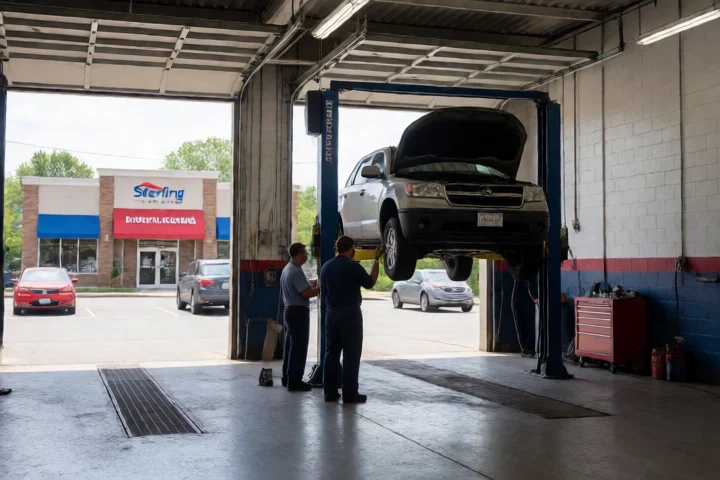
Suppose a household faces a $430 vehicle repair due Friday, has $180 available, and receives $700 in dependable pay the following Wednesday. The immediate gap is $250, not $430. Repaying $250 plus every stated charge on Wednesday leaves $450 before rent, food, transportation, and existing automatic withdrawals. If those commitments consume that $450, the loan has shifted the problem by five days. A fallback matters here: reduced repair scope, a payment arrangement, or another source for the remaining balance.
Virginia’s licensed payday-loan rules illustrate why the amount advanced should stay separate from affordability. A legal limit is not a household budget. The relevant number remains the amount that survives after the scheduled repayment clears.
A local lens for access, work, and payment timing
Sterling sits within Loudoun County’s human-services network, which changes the first comparison for an expense involving food, housing, utilities, transportation, or health care. Loudoun County Department of Family Services is a local government starting point for public-assistance and human-services information. Those routes matter because an eligible benefit, emergency program, or provider referral reduces the amount that needs financing.
Payment timing deserves the same local attention. A utility balance due before the next paycheck calls for a different calculation from a repair bill that a shop agrees to split into two payments. For an essential-bill gap, contact with the biller and a local assistance search belong near the beginning of the decision, since either result changes the loan amount and due-date fit.
Sterling borrowers also face Virginia lending rules, not a generic national rulebook. A licensed payday lender is subject to the Virginia Payday Loan Act, including disclosure requirements, cancellation rights through the close of the next business day, and statutory repayment provisions. That identity check anchors the rest of the comparison to a specific business and product.
Compare cost, timing, and exit options together
Record the cash received, every payment amount, every payment date, every listed fee, and the rules for cancellation, early payoff, missed payments, and payment arrangements. A small scheduled payment says little by itself; the calendar and the final repayment figure do the real work.
| Offer | Payment Schedule | Exit Flexibility | Cash Received | Total Repayment | Fees And Triggers |
|---|---|---|---|---|---|
| Virginia payday-loan example at the statutory maximum amount | Use the lender’s disclosed due date and term | Virginia law includes cancellation through the close of the next business day and an extended-payment-plan provision subject to statutory conditions | |||
| One date; compare it with the next reliable income date | Record cancellation and early-payoff terms in the lender’s documents | Amount actually advanced after any stated deductions | Add the one scheduled payment and every disclosed fee | ||
| List each due date beside rent, utilities, insurance, and other fixed withdrawals | Record payoff amount, payment-change rules, and any arrangement offered after hardship | Amount deposited or handed over | Add every scheduled installment, including any final uneven payment | Separate finance charges from fees that arise after a payment problem |
Apply the numbers to plausible household situations
In a hypothetical Sterling household, a worker needs a vehicle repair to keep getting to work. The shop quotes $620, but the vehicle remains usable after a $220 repair that addresses the immediate safety issue.
The immediate gap falls to $220. The household compares the repair shop’s timing with a cash-loan repayment date, then measures both against the next paycheck after rent and fuel.
Borrowing the full $620 would finance work that is not immediately required. The smaller repair amount creates a narrower repayment test and leaves room for a later decision on the remaining work.
In another hypothetical Sterling case, a household is $180 short on a utility bill due Monday, while dependable income arrives Thursday.
The four-day gap directs attention to the utility provider’s payment options and to Loudoun County or Virginia assistance routes before any loan amount is set.
A payment extension or assistance referral changes the cash need. If neither closes the gap, the household compares repayment on Thursday with the rest of Thursday’s required withdrawals.
A hypothetical worker with irregular seasonal shifts faces a $300 housing-related shortfall and expects work income later in the month, without a fixed amount or date.
Expected income does not supply a firm repayment source. The household treats the payment date as uncertain and looks first for housing-resource navigation through Loudoun Cares or 211 Virginia.
A loan due before a confirmed income date creates a second deadline without resolving the first one. In this situation, the fallback plan carries more weight than an estimated future shift.
Alternatives to price before signing
An urgent bill does not always require an urgent loan. Each route below addresses a different part of the gap: the amount, the deadline, or the source of payment.
| Route | Speed | Likely Cost Category | Eligibility Friction | Risk |
|---|---|---|---|---|
| Bill-provider payment arrangement | Often starts with direct contact before the bill date | Potentially lower than new borrowing; terms depend on the provider | Provider rules and account status govern access | A missed arrangement payment can leave the original bill unresolved |
| Loudoun County Department of Family Services or CommonHelp | Program timing varies | Public-assistance route rather than loan finance charges | Household and program requirements apply | Assistance does not arrive on every timeline or cover every expense |
| Loudoun Cares or 211 Virginia resource navigation | Resource-referral route | Individual providers set their own requirements | A referral is not a funding commitment | |
| Credit-union, community, or personal-support option | Timing depends on the organization or person involved | Varies by arrangement | Membership, available funds, or relationship terms apply | Unclear repayment expectations create a separate obligation |
Risks hidden by a small scheduled payment
Repeat borrowing starts when the repayment date drains money needed for the next essential bill. Virginia restricts a payday lender from making a new payday loan to a borrower who already has an outstanding payday loan and places limits on renewals, but a household still needs to test whether repayment leaves enough for its ordinary obligations. The scheduled payment is only the visible portion of the decision.
Automatic-payment language deserves a close reading because a withdrawal attempt can collide with rent, groceries, or another scheduled debit. Record the authorization, the account used, the lender’s stated procedure for changing payment arrangements, and the consequences the documents describe for a late or returned payment. Unclear disclosures, blank fields, pressure to sign before terms are available, or a lender identity that does not match the application are stop signals.
Virginia law also bars a payday lender from threatening or pursuing criminal prosecution solely because a borrower does not pay a payday loan. Concerns involving a Virginia-regulated lender belong with the State Corporation Commission’s complaint process; consumer-finance complaints within federal jurisdiction also have a route through the Consumer Financial Protection Bureau.
A practical go-or-stop checklist
- Write the exact essential expense, the amount already available, and the remaining gap. Stop if the requested advance exceeds that gap without a stated purpose for the difference.
- Match the proposed due date to a reliable income date. Stop if repayment leaves too little for rent, food, transportation, utilities, insurance, and scheduled account withdrawals.
- Identify the lender by its legal business name and search its available licensing information through NMLS Consumer Access. Stop when the business identity in the offer does not match the company record.
- Read the loan documents before signing and record the cash received, total repayment, payment dates, finance charges, verification fees, and any late or returned-payment terms. Stop if those figures are missing or inconsistent.
- For a Virginia payday loan, compare the principal and charges with the state limits: no more than principal, a loan charge up to 20 percent of the amount advanced, and a verification fee up to $5.
- Locate the cancellation, early-payoff, and repayment-arrangement language. Virginia payday-loan law includes cancellation through the close of the next business day and an extended-payment-plan provision subject to statutory conditions.
- Read the automatic-payment authorization and privacy terms. Stop if the withdrawal authority, account information requested, or data-sharing terms are unclear.
- Name a fallback before money changes hands: a provider payment arrangement, Loudoun County assistance inquiry, Loudoun Cares referral, 211 Virginia search, or another identified source for the bill.
Where to check the figures
- Virginia State Corporation Commission, Bureau of Financial Institutions — official information — Virginia State Corporation Commission, Bureau of Financial Institutions