
Shortfall scenarios with different exit paths
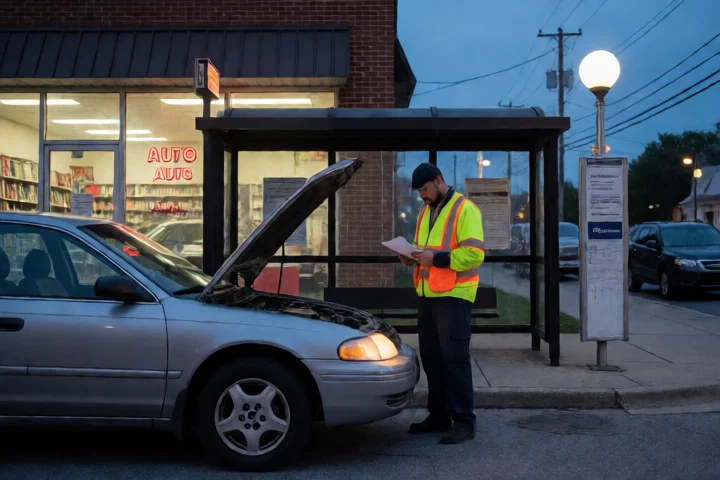
Suppose a Roanoke worker needs an essential vehicle repair before the next scheduled shift. The repair bill creates a narrow, practical gap: missing work would reduce the income intended to repay the loan. A smaller loan that covers only the repair has a clearer exit path than a larger offer that adds cash for unrelated spending. The important number is the repair amount after any cash already available, followed by the first payment date and the paycheck that funds it.
In another hypothetical, a Roanoke County household faces a medical visit or travel expense while a utility bill and rent remain due before the next pay period. Borrowing the full medical charge may leave too little room for those routine bills once the installment payment begins. Splitting the expense through a provider payment arrangement, changing a bill due date, or finding assistance for one part of the gap changes the loan calculation because the amount borrowed falls.
A third hypothetical involves reduced shift hours. Payroll arrives on Friday, but a necessary expense lands earlier in the week and the following paycheck remains uncertain because scheduled hours have changed. That situation has no solid repayment source yet. An installment loan does not repair an income gap that continues into the payment period; it moves the shortfall forward and attaches a required payment to it.
Test whether borrowing solves the whole problem
Start with four figures: the essential expense, cash available for that expense, the date payment is required, and income remaining after regular bills before the first loan payment. Subtract available cash from the essential expense. That result is the actual gap. Then subtract regular bills and the proposed installment payment from expected income. A negative result means the offer fails the household budget even if the lender is willing to make it.
Suppose an urgent repair costs $600 and $175 is available. The immediate gap is $425. If the next paycheck leaves $120 after rent, utilities, groceries, and transportation, a proposed payment above $120 lacks a credible source. Adding another $300 because it appears in an offer changes the problem from a $425 repair gap into a larger debt obligation. Lender capacity and household capacity are different measurements.
A fallback belongs in the same calculation. Savings, a bill arrangement, help from a household member, or a reduction in the expense can change the amount required. Future borrowing is not a fallback; it is the beginning of repeat borrowing. That cycle is the expense to avoid.
How local timing can change the decision
Roanoke is an incorporated Virginia city with municipal resident-service information, while borrowers in nearby Roanoke County still operate under Virginia consumer-finance rules. That distinction changes the research path: a city or county resource may help with a pressing household expense, but lender conduct and short-term lending requirements sit within Virginia law.
Virginia Code Title 6.2, Chapter 18 provides the state framework for short-term loans, including lender requirements, loan structure, disclosures, and repayment restrictions. For a Roanoke-area offer, the lender's identity and the exact product terms matter more than a local marketing claim. The Virginia State Corporation Commission's Bureau of Financial Institutions provides consumer information on regulated lenders and handles licensing questions and complaints involving regulated financial institutions.
Timing remains local even when the governing rules are statewide. A bill due in Roanoke before payday creates a different decision from the same bill due after payday. Virginia 211 offers statewide referrals for food, housing, utilities, transportation, health, and emergency support, including for Roanoke residents. Help with one immediate bill can reduce the amount that needs financing.
Compare the full repayment, not the headline amount
Offers become comparable when every payment is placed on one calendar. List each required payment, add them, and record the first and last due dates. Fees, payment frequency, and early-payoff terms belong beside that total. A lower periodic payment can stretch across more dates and leave the borrower committed longer; a faster schedule can collide with rent or other recurring bills. Neither label answers the affordability question on its own.
| Offer | Total Repayment | Payment Timing | Fees And Consequences | Exit Flexibility |
|---|---|---|---|---|
| Offer 1 | Compare the full amount due over the loan term, including each stated fee. FAQ — What is an installment loan? It is credit repaid through scheduled payments over an agreed period rather than in one lump sum. FAQ — What should a Roanoke borrower compare? Review the amount financed, repayment schedule, interest or APR disclosures, stated fees, and the total amount due before choosing an offer. FAQ — What can vary for borrowers in Roanoke and Roanoke County? Lender criteria, available terms, fees, and review procedures can differ, so a local address does not guarantee a particular offer or approval result. FAQ — What should a borrower check before signing? Confirm the lender's identity, read the agreement for payment dates and late-payment terms, and use Virginia's Bureau of Financial Institutions for licensing questions or complaints involving regulated financial institutions. FAQ — Where can someone seek help with a consumer-credit problem? Virginia Legal Aid may provide civil legal information or assistance to eligible Virginia residents, subject to eligibility and local service coverage. | Record first due date, frequency, and final due date | List origination, late, returned-payment, and other stated charges | Record early-payoff method, payoff amount, cancellation terms, and payment-change options |
| Offer 2 | Use the same full-payment sum as Offer 1 | Put each due date beside expected paydays and routine bills | Separate one-time charges from charges triggered by a missed payment | Read whether early repayment changes the remaining amount owed |
| Offer 3 | Compare the final dollar total, not only the funds delivered | Normalize weekly, biweekly, and monthly schedules onto one calendar | Mark charges that are unclear or absent from the stated terms | Note how the lender accepts payoff and how automatic payments are ended |
Compare borrowing with non-loan routes
A loan is one route to a shortfall, not the whole menu. A bill arrangement or assistance referral may reduce the amount needed, while a community or credit-union option may offer a different borrowing structure. Availability depends on the provider, account history, eligibility, timing, and the expense itself. The point is financial arithmetic: every portion of the gap resolved elsewhere avoids being added to the repayment schedule.
| Route | Speed | Likely Cost | Eligibility Friction | Risk |
|---|---|---|---|---|
| Installment loan | The timeline reflects the lender's review and the information submitted with the application. | Borrowing cost and disclosed fees | Application, identity, income, and lender requirements | Required payments can strain later pay periods |
| Before a due date is missed, ask the lender whether it has a hardship process or can discuss an alternative payment arrangement. | Depends on the creditor or service provider | Often lower than new borrowing, subject to provider terms | The result may depend on the lender's review of the application and the account information it can verify. | A delayed bill still needs a dated repayment plan |
| Virginia 211 referral | Depends on local program capacity and the need involved | Assistance route rather than a loan category | Program rules and available services | Support is not assured, so the expense deadline still matters |
| Credit-union or community financing option | Depends on membership, provider rules, and processing | Varies by product and provider | Membership or underwriting requirements | Terms still require the same repayment analysis |
The failure points to identify in advance
Repeat borrowing is the central failure point. A payment that consumes money needed for the next essential expense creates pressure for another loan, and the original emergency becomes a recurring debt expense. Full repayment, payment dates, and the source of each payment expose that problem before money changes hands.
Automatic payment authorization deserves the same attention as the payment amount. Borrowers need to know the account used, the timing of withdrawals, the procedure for revoking or changing an authorization, and the consequences stated for a failed payment. Unclear terms around fees, late payments, returned payments, or payoff should stop the decision until the lender supplies a readable answer.
Virginia's Bureau of Financial Institutions is the state contact for questions about regulated-lender licensing and complaints. Virginia Legal Aid offers civil legal information and assistance for eligible Virginia residents dealing with consumer-credit, debt-collection, or related problems. Those routes matter when a dispute has already replaced an ordinary borrowing decision.
A final checklist before you apply
A workable application decision leaves a paper trail: the lender, the terms, the payment calendar, and the backup plan all appear in one place.
- Lender identity appears in the offer, and the Virginia State Corporation Commission's Bureau of Financial Institutions has information for licensing questions involving regulated lenders.
- Written terms state the amount delivered, every scheduled payment, the full repayment amount, and each disclosed fee.
- First payment date fits expected income after rent, utilities, food, transportation, and other fixed obligations.
- Payment calendar shows every due date through the final payment, including dates that fall near other bills.
- Automatic-payment terms identify the account, withdrawal timing, and the process for changing or ending authorization.
- Early payoff, cancellation, late-payment, and returned-payment terms are stated clearly enough to price the exit path.
- Privacy terms identify what personal and financial information the lender collects and how it is shared.
- Fallback plan covers a reduced-hours paycheck, a new essential expense, or a payment that cannot be made from ordinary income.
Where to check the figures
- Virginia State Corporation Commission — Virginia State Corporation Commission