
How local timing can change the decision
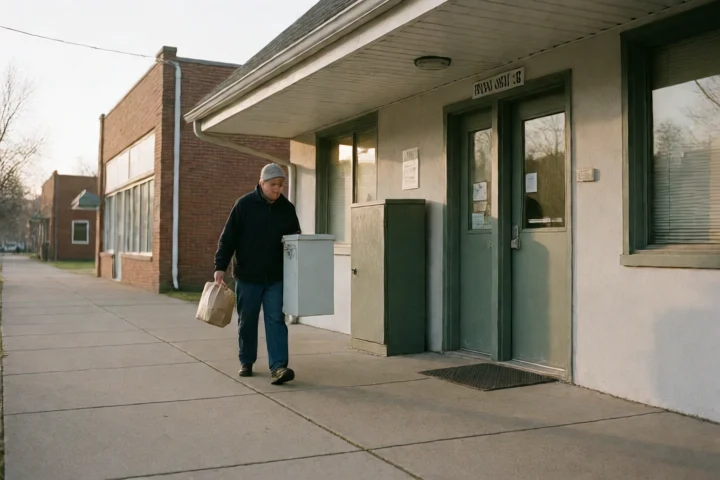
Roanoke and Roanoke County share the same Virginia loan laws, yet a city address and a county address can lead you to different local human-services offices when the cash gap involves food, utilities, housing, health care or transportation. Roanoke City Human/Social Services serves city residents, while Roanoke County Department of Social Services serves eligible county residents. That residence line matters when assistance could cover part of a bill before a loan is needed.
Timing changes the comparison as well. A bill due before your next income arrives is one kind of problem; a bill that remains unaffordable after that income arrives is another. Those routes do not promise immediate funds, but they can shrink a loan request tied to an eligible household expense. Roanoke Area Ministries is another local emergency-help contact worth checking when a modest shortfall has a local assistance path.
Virginia's statutory short-term-loan rules apply to that specific product, not automatically to every offer marketed as a cash loan. Installment loans and lines of credit require their own term comparison. A familiar label is not a term sheet.
Start with the amount and the timing gap
Put four figures on one line: the expense due now, money already available for it, income arriving before the due date, and essential bills that income must still cover. The gap equals the expense minus available money and any income that remains after those essential bills. That number, not the amount offered by a lender, is the amount under discussion.
Suppose a repair costs $420. You have $130, and $220 arrives next Friday, but $170 of that income already belongs to rent, groceries and utilities. The actual funded amount available before the repair deadline is $180, leaving a $240 gap. Borrowing $420 would solve the repair invoice while creating a repayment burden for money you never needed.
Name the repayment source with the same precision. “My next paycheck” is too vague if that paycheck already pays the ordinary month. A credible source has a date, an expected amount and room after routine obligations. A fallback matters too: delayed payroll, reduced hours or an unexpected bill turns a tight plan into missed payments quickly.
Apply the numbers to plausible household situations
These are hypothetical Roanoke situations, not reports about local borrowers.
A hypothetical worker needs a $300 vehicle repair to keep getting to work. Payday arrives in 10 days, and the worker expects $560 after deductions. Rent, groceries and a utility payment will take $410 before the following payday.
Only $150 of that paycheck remains for the repair. A $300 advance does not fit merely because the repair protects work attendance; the repayment would consume twice the budget room.
The repair shop's payment timing, a smaller repair scope, or local emergency-help routes affect the decision because they address the $150 difference between the expense and the repayment capacity.
A hypothetical Roanoke County household faces a $185 medical visit and travel cost. Its next income is enough to cover the expense, yet that income arrives four days after the provider's requested payment date.
This is a timing gap, not necessarily an affordability gap. A provider payment arrangement or a date change has value because it removes the need to borrow for a bill the household already has funds to cover.
If borrowing remains necessary, the household compares the full repayment against the four-day timing benefit, then preserves money for routine bills due after payday.
A hypothetical employee has fewer scheduled shift hours this pay period and is short $260 for utilities and groceries. The next paycheck is also expected to be smaller, with no separate income behind it.
The shortage continues into the repayment period. A loan payment would compete with the same utilities and groceries that caused the initial gap.
211 Virginia, CommonHelp, and the correct city or county assistance office become especially relevant because reducing the household bill changes the underlying gap. Borrowing does not repair a recurring income shortfall.
A side-by-side test for competing loan terms
Place every offer on the same sheet and compare dollars paid, dates paid and what happens if the plan changes. A smaller scheduled payment can hide a longer repayment period or a larger overall charge. Other products need their own reading because those figures do not automatically govern them.
| Offer | Amount Received | Total Repayment | Payment Timing | Fees And Terms | Exit And Fallback |
|---|---|---|---|---|---|
| Virginia statutory short-term loan | Exact cash advanced; principal cannot exceed $500 | Total repayment is the amount advanced plus every disclosed charge. Review the agreement for the exact total before accepting the loan. | Maturity date must be at least twice the borrower's pay cycle | Compare the disclosed finance charge, total repayment amount, payment dates, and any charge that can apply if payment is late or changed. | No renewal or extension; rescission is available by the close of the next business day after the transaction when the money or check is returned |
| Installment cash-loan offer | Cash actually delivered after any stated deductions | Add every scheduled installment and any disclosed charges | List each due date and match it to income dates | Read finance charge, annual percentage rate and payment schedule | Read payoff terms, missed-payment terms and any change-payment options shown in the agreement |
| Line-of-credit cash advance | Only the amount drawn now | Calculate repayment for the actual draw under the stated payment structure | Record the first payment date and later payment pattern | Identify periodic charges, draw fees and finance charges disclosed for the draw | Read the payoff method and terms governing future draws or account use |
Risks hidden by a small scheduled payment
A payment fits only when it fits alongside the bills that still arrive after the loan closes. Total repayment is the number that belongs in your budget, even when an offer highlights a smaller installment. Repeat borrowing is a warning sign because each new request sits on top of the shortfall that the earlier loan did not resolve.
Payment authorization deserves the same attention as the rate. Read the bank-account authorization, the payment dates, the late-payment terms and the returned-payment consequences before accepting. Keep the agreement and its disclosures together: Virginia requires specified disclosures for statutory short-term loans, including the amount financed, finance charge, annual percentage rate, payment schedule and rescission right.
Unclear figures, missing dates or terms that conflict with the agreement are reasons to stop. Virginia's SCC Licensee Search shows whether a business appears in the Commission's licensing records. The SCC Bureau of Financial Institutions handles state lender-regulation questions, while the Consumer Financial Protection Bureau accepts complaints about consumer-finance products and services. A missed payment does not erase the debt, though Virginia law restricts short-term-loan collection threats of criminal prosecution for failure to repay.
Consumer Financial Protection Bureau — official information · Virginia State Corporation Commission — official information · Virginia State Corporation Commission — official information
What to try before taking the full loan amount
A full loan amount is often a blunt response to a narrower problem. These routes have different timing and eligibility demands, yet each can reduce the amount that needs financing.
| Route | Speed | Likely Cost Category | Eligibility Friction | Risk |
|---|---|---|---|---|
| Ask the company you need to pay whether it can revise the timing or structure of that specific obligation. | Depends on the biller and the payment date | The financial effect depends on the provider’s response and the revised payment terms offered. | Requires the biller to offer an arrangement | A postponed bill still needs room in the next budget |
| 211 Virginia or Roanoke Area Ministries referral | Varies by program, need and local availability | Non-loan assistance route | Program rules and available resources apply | Assistance may cover only part of the expense or arrive after the due date |
| CommonHelp or city/county human-services route | Varies by program and application processing | Public-assistance route | Household and program requirements apply; city and county residence affects the local office | This route may not address an immediate bill deadline |
| Credit-union or community financing category | Varies by institution and application | Terms vary by provider | Membership, underwriting or account requirements may apply | A lower payment still requires enough room in the household budget |
The last review before accepting loan terms
Acceptance should follow a documented fit between the expense, the repayment date and the agreement. If one of these points remains blank, the decision remains unfinished.
- The expense has a specific dollar amount and due date, and the requested amount does not exceed the remaining gap.
- The repayment source has an expected date and amount, with routine rent, food, utilities and transportation already deducted.
- Virginia SCC Licensee Search shows the lender in the Commission's licensing records when the offer is presented as a Virginia-licensed loan.
- The agreement states the amount financed, finance charge, annual percentage rate, payment schedule and every dollar of total repayment.
- Each payment date fits the income calendar without forcing another loan, a skipped essential bill or an unfunded bank withdrawal.
- The agreement's cancellation, rescission or early-payoff terms are identified; statutory short-term loans allow rescission by the close of the next business day when the funds are returned.
- Bank-account authorization, late-payment terms and returned-payment consequences are understood before any authorization is given.
- A fallback exists if pay arrives late or falls short, including a bill arrangement or the appropriate Roanoke city, Roanoke County or statewide assistance route.
Virginia State Corporation Commission — official information