
Put each offer on the same cost timeline
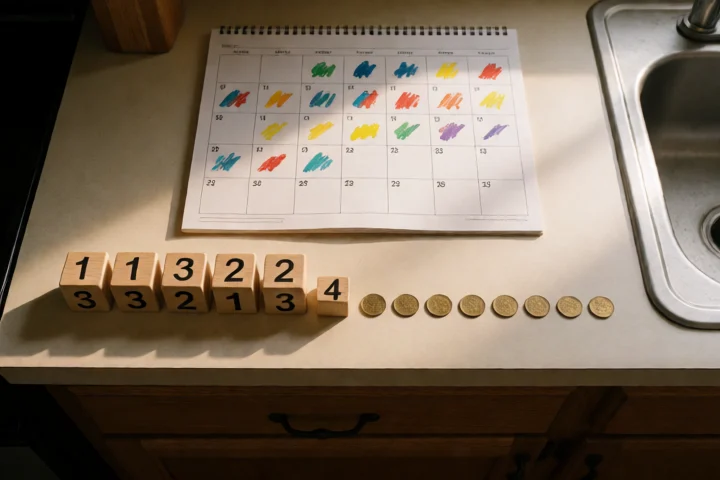
The useful comparison begins with the household’s cash calendar, not the advertised borrowing amount or a single installment. Put the amount received, every payment date and amount, and the final payment on one timeline. That reveals the question that decides whether an installment loan fits: how much cash leaves the household, and when.
Payment frequency changes the pressure on a budget. A schedule of $125 every two weeks produces 26 withdrawals over a year; $250 each month produces 12. Entering each scheduled withdrawal beside expected income dates makes the timing visible. A smaller installment carries little comfort when it arrives twice as often.
| Offer | Cash Received | Payment Schedule | Total Repayment | Fees And Exit |
|---|---|---|---|---|
| Comparison entry 1 | Enter the amount available to use after any amount withheld at funding. | Enter every due date and required payment amount on a calendar. | Add every scheduled payment, including a final payment that differs from the regular amount. | Enter the stated charges and terms that affect a late payment, returned payment, or early payoff. |
| Comparison entry 2 | Enter the amount available for the expense after any amount withheld at funding. | Enter every due date and required payment amount beside expected income dates. | Add every scheduled payment across the full repayment timeline. | Enter the stated charges and terms that affect payment processing, late payment, or early payoff. |
| Comparison entry 3 | Enter the amount available to use after any amount withheld at funding. | Enter the first due date separately, then enter every later payment date and amount. | Add every scheduled payment and compare that sum on the same timeline as the other entries. | Enter the stated charges and terms that affect a missed payment, automatic payment, or early payoff. |
Define the shortfall before comparing offers
The bill creates the borrowing need; the lender's maximum offer does not. Start with four figures: the expense due, cash already reserved for it, other confirmed help, and the date on which the balance must be paid. Subtract reserved cash and confirmed help from the expense. That result is the shortfall. A $780 repair bill, $250 in available cash, and $100 contributed by a family member leave a $430 gap. Borrowing $1,000 because that amount appears available turns a $430 problem into a larger repayment obligation.
Repayment deserves the same arithmetic. List the next reliable income dates, subtract rent or housing, food, utilities, transportation, insurance, and other commitments already due, then place each proposed installment on the remaining dates. A fallback belongs in the calculation as well: a second source of income, a bill arrangement, available savings, or a decision to decline the offer if the payment has no place to come from. Hope is many things; a repayment source isn't one of them.
Local constraints that belong in the budget
Mechanicsville borrowers use Hanover County as the local government channel for household-assistance referrals. That fact changes the amount placed in the loan comparison when the immediate problem involves a basic need. The Hanover County Department of Social Services appears in Virginia's local-agency directory, and Virginia 211 directs residents to community resources for food, housing, utilities, health care, employment, and other support. A household facing a utility bill should establish whether assistance or a payment arrangement reduces that particular balance before financing the full bill with unrestricted debt.
Virginia's Energy Assistance Program covers fuel, crisis, cooling, and weatherization assistance for eligible energy-related needs. It is purpose-specific, so it does not fill a general cash shortage. Still, if an eligible utility emergency absorbs part of the immediate burden, the repayment plan changes: the borrower compares financing only the remaining gap. Lender status has a local consequence, too.
Virginia Department of Social Services: Local Departments of Social Services · Virginia Department of Social Services: Energy Assistance · Virginia State Corporation Commission: Bureau of Financial Institutions
Red flags that should stop the application
An application should stop when the lender will not provide terms that identify the amount financed, payment schedule, total repayment, and consequences of late or returned payments. Those details reveal whether a missed installment triggers a fee, whether the account has enough money on each due date, and whether the obligation invites repeat borrowing. Repeat loans often signal that prior payments consumed money needed for the next ordinary expense; adding another installment rarely repairs that pattern.
Automatic payment authorization deserves separate attention because it governs access to the bank account on payment day. Borrowers need the stated withdrawal amount, date, method for revoking or changing authorization, and the consequences described for a failed withdrawal. A loan contract that leaves payoff terms, privacy handling, or payment consequences unclear has not supplied enough information for a sound cost comparison. Virginia regulates consumer-finance installment lending and payday lending under separate statutory chapters, so a fast need for money does not identify the product or the governing rules by itself.
Three local-life stress tests
Hypothetical situations make the timing test visible before a contract adds pressure.
Suppose a Mechanicsville worker needs a vehicle repair to keep reaching work. The repair shop requires $640, but the household has $240 after setting aside money for rent and groceries.
The gap is $400, not $640. A proposed biweekly installment has to be placed against the worker's actual paydays and transportation costs for the period after the repair.
If the first withdrawal arrives before the next paycheck or leaves no money for fuel, the vehicle repair has preserved transportation while the loan has created a new transportation problem.
Suppose a Hanover County household faces a utility balance due before the next dependable income date, with only part of the balance available in cash.
Virginia 211, the Hanover County Department of Social Services, and the Energy Assistance Program become relevant because the expense has a specific utility purpose.
Assistance, eligibility, or a payment arrangement might reduce the financed amount. If no support applies, the proposed loan payment still needs a place in the income calendar after the utility bill is resolved.
Suppose a Mechanicsville household receives irregular or seasonal work income and wants an installment loan for a housing payment gap.
A lender's scheduled due dates should be tested against the lowest credible income period, not a stronger recent month.
A payment plan that works only after a favorable work week has no stable repayment source. The housing balance, income timing, and fallback arrangement need resolution before an installment is added.
Virginia Department of Social Services: Local Departments of Social Services · Virginia Department of Social Services: Energy Assistance
Other ways to close or shrink the gap
A shortfall does not always require one source of cash. Splitting the problem—part payment arrangement, part assistance inquiry, part smaller loan—reduces the repayment burden when those routes are available. Eligibility, timing, and provider terms decide which route works, so each belongs beside the loan offer on the same deadline.
| Route | Speed | Likely Cost Category | Eligibility Friction | Risk |
|---|---|---|---|---|
| Bill payment arrangement or date change | Depends on the biller and the due date. | Often lower than new consumer debt, subject to the provider's terms. | Requires contact with the utility, landlord, medical provider, repair shop, or other biller. | An arrangement that still exceeds the next income amount merely moves the shortfall. |
| Virginia 211 or Hanover County assistance referral | Varies by program, funding, and household circumstances. | Assistance is not consumer-loan interest. | Program rules and documentation can apply. | Support may address only a specific expense or may not arrive by the bill deadline. |
| Virginia Energy Assistance Program | Varies by assistance type and eligibility. | Purpose-specific public assistance. | Limited to eligible fuel, utility-crisis, cooling, or weatherization needs. | It does not supply unrestricted cash for unrelated bills. |
| Credit-union personal loan or small-dollar credit | Varies by institution, membership, and underwriting. | Terms vary by product and applicant. | Membership and underwriting requirements apply. | Approval and terms are not assured; the payment still requires a workable income date. |
Virginia Department of Social Services: Local Departments of Social Services · Virginia Department of Social Services: Energy Assistance
The last review before accepting loan terms
Acceptance makes the calendar binding. These checks establish whether the offer answers the actual shortfall and whether its payment structure survives ordinary household obligations.
- Written terms: the document states the amount financed, payment amount, number of payments, due dates, APR, and total repayment.
- Net proceeds: the amount actually received covers the calculated gap without adding unneeded borrowing.
- Due-date fit: each scheduled installment remains affordable after housing, food, utilities, transportation, insurance, and other commitments already due.
- Payment consequences: late-payment, returned-payment, and collection-related terms are identified before acceptance.
- Automatic withdrawals: the authorization states the amount, date, account method, and the contract's procedure for changing or revoking authorization.
- Payoff and cancellation terms: early-payoff treatment, cancellation rights stated in the agreement, and final-payoff process are clear.
- Fallback plan: a specific response exists for an income interruption, such as a bill arrangement, assistance inquiry, savings, or declining the loan.