
A local lens for access, work, and payment timing
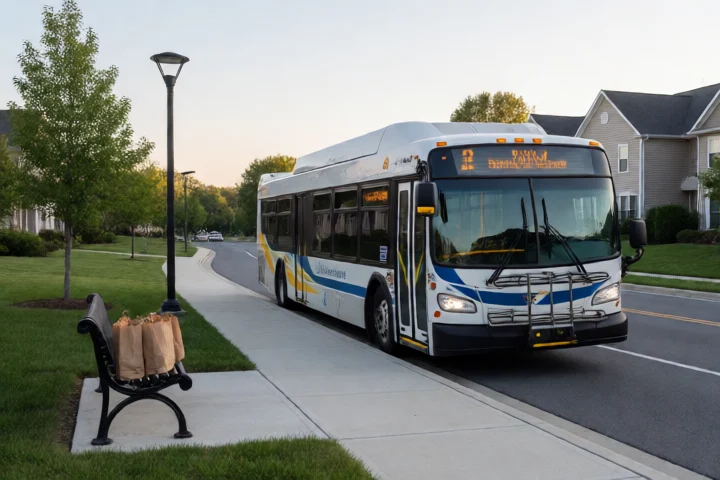
Linton Hall sits in Prince William County, making county-level assistance a practical part of the borrowing decision. The Prince William County Department of Social Services serves county residents and provides a starting point for public-benefit and family-support navigation. When the gap involves food, energy, family needs, or another expense that assistance addresses, finding that support can reduce the loan amount or remove the need to borrow.
211 Virginia adds a statewide referral route for food, housing, utilities, health care, employment, and crisis support. That matters to repayment timing because an urgent household bill sometimes shrinks after direct assistance or a payment arrangement is found. The remaining balance then becomes the figure to compare against scheduled loan payments.
Virginia rules also change the questions attached to a lender. Those figures apply to loans governed by that law, not automatically to every installment product. A Linton Hall borrower therefore needs the loan’s governing terms and the payment dates in hand before judging affordability.
The Virginia State Corporation Commission’s Licensee Search is relevant before an applicant supplies bank-account access, identity documents, or an application. Virginia law generally requires a consumer-finance-company license for the business governed by Chapter 15, which gives licensing status a direct place in the local decision.
Separate the urgent bill from the borrowing decision
Start with four figures: the bill’s amount, its due date, the cash already available, and the next dependable income date. Subtract available cash and any confirmed assistance from the bill. The result is the immediate gap. A lender’s maximum offer has no useful role in that calculation; it measures access to credit, not what the household needs.
Suppose an urgent bill is $900, available cash is $250, and confirmed help covers $150. The gap is $500. If the next dependable income arrives in three weeks, a proposed payment due before that date creates a timing problem even when the monthly payment looks manageable. A credible repayment source means a known paycheck, benefit, or other dependable inflow, with enough left after ordinary expenses to cover the scheduled payment.
Write down a fallback before borrowing: what expense gets delayed if income arrives late, and what happens if the bill rises? If no answer exists, the loan is being used to move uncertainty forward. That is the point at which a smaller loan, a payment arrangement, or direct assistance deserves priority.
Test the loan against more than one outcome
Suppose a Linton Hall household needs $700 for an essential vehicle repair and expects the repair to protect access to work. The loan passes the first test only if the scheduled payments still fit after fuel, housing, food, and other fixed expenses. If the first payment arrives before the next dependable income, the transportation problem has simply become a payment problem with a due date.
In another hypothetical situation, a household faces a $500 utility gap with income expected on a stated date. Contacting the utility provider and seeking county or 211 Virginia assistance could reduce the amount financed. A loan for the remaining balance has a clearer purpose when its payment dates begin after the expected income and leave room for the next utility cycle.
Consider a third hypothetical household whose income arrives irregularly or seasonally. A payment that fits during a strong month still creates a poor plan if a weak month brings no dependable repayment source. The relevant stress test uses the lowest expected income period, the full installment, and the consequences of a late or returned payment. If that version fails, the application should stop.
Compare cost, timing, and exit options together
| Offer | Total Repayment | Timing | Fees And Exit |
|---|---|---|---|
| Offer A: closed-end installment loan | Record the amount financed, finance charge, APR, and total of payments shown in the disclosure. | Record each payment date and payment frequency; compare the first date with the next reliable income. | Record processing, origination, maintenance, late, and returned-payment charges, plus payoff or cancellation terms. |
| Offer B: Virginia short-term loan | Virginia law permits an original principal from $100 to $2,500 and a term from four to 24 months; simple interest may reach 36% per year, with statutory fees subject to the law’s terms. | Compare the four-to-24-month schedule with the household’s income pattern and other due dates. | The statute allows an origination fee up to $20 and a monthly maintenance fee up to 8% of the originally contracted amount, capped at $25 per month, subject to its conditions. |
| Offer C: Chapter 15 consumer-finance loan | For a loan governed by Virginia’s Consumer Finance Act, compare the unpaid-principal interest limits with the disclosure’s total of payments. | Check the payment schedule and the date on which the first installment becomes due. | A processing fee up to $50 and a late charge up to 5% of an installment more than seven days late are permitted under stated conditions; record the actual contract terms. |
Code of Virginia § 6.2-1817 — Short-term loans; terms and conditions
Red flags that should stop the application
The first stop condition is an unexplained total. Closed-end consumer-credit disclosures under Regulation Z include the amount financed, finance charge, APR, total of payments, payment schedule, and late-payment information when applicable. A payment amount without the full repayment figure leaves the main cost unanswered.
Repeat borrowing is another warning sign. When one installment consumes the money needed for the next essential bill, the original gap has become a cycle. The same concern applies when a missed payment would trigger a late charge, returned-payment cost, or collection problem that the budget cannot absorb.
Automatic bank withdrawal deserves specific scrutiny. Regulation E generally prohibits conditioning credit on repayment by preauthorized electronic fund transfer. When such a transfer is authorized, the authorization must be signed or similarly authenticated and a copy must be provided. A lender’s statement that automatic withdrawal is mandatory for approval is a reason to stop and examine the terms.
Unclear fees, missing payment dates, pressure to provide bank access before the terms are available, or a contract that does not explain payoff treatment all point to the same conclusion: the application has outrun the information needed to judge it.
Other ways to close or shrink the gap
| Route | Speed | Likely Cost Category | Eligibility Friction | Risk |
|---|---|---|---|---|
| Bill negotiation or payment timing | Depends on the provider’s response; useful when the bill is already identified. | Potentially lower cost than new credit if the provider offers timing relief without a finance charge. | Requires a conversation and a confirmed arrangement. | A missed arrangement can leave the original bill unresolved, so the new date needs to fit income. |
| Prince William County Department of Social Services or 211 Virginia | Varies by need and program; both provide navigation rather than a guaranteed payment. | Direct assistance or referral can reduce the amount that needs financing. | Program eligibility and documentation vary. | An unresolved gap remains if assistance does not cover the expense or arrives after the due date. |
| Federally insured credit union or community credit option | Application and underwriting time vary. | A credit product’s rate and fees depend on the institution and applicant. | Membership, income, identification, and underwriting requirements may apply. | It remains borrowing, so the payment schedule and total repayment still control affordability. |
| Smaller installment amount after direct help | Follows the timing of the assistance or negotiated reduction. | Financing less principal reduces the balance exposed to interest and fees. | Requires a confirmed source for the reduced amount. | The remaining bill still needs a payment date and a credible repayment source. |
The last review before accepting loan terms
- Write the exact gap, due date, available cash, confirmed assistance, and repayment source; stop if the requested amount exceeds the documented gap.
- Search the Virginia State Corporation Commission’s Licensee Search for the lender when the product falls within regulated Virginia financial services; stop if the lender’s claimed authorization cannot be reconciled with the search.
- Read the written disclosure for amount financed, finance charge, APR, total of payments, payment schedule, and late-payment information; stop if any material field is missing or unclear.
- Add every stated fee to the repayment figure, including processing, origination, maintenance, late, and returned-payment charges; stop if the lender will not explain when each fee applies.
- Place every payment date beside expected income dates and essential expenses; stop if one payment depends on uncertain income or leaves no room for the next basic bill.
- Read payoff, cancellation, and automatic-payment language; stop if bank withdrawal is presented as mandatory or the authorization terms and copy are unavailable.
- Record the fallback plan, such as a confirmed bill arrangement, county resource contact, or smaller amount; stop if no credible response exists for a late income date or unexpected expense.