
Test whether borrowing solves the whole problem
Write down four figures: the bill amount, money already available, the bill deadline, and the income available after essential expenses before the proposed loan payment is due. Subtract available money from the bill. That result is the gap. Then subtract rent or housing, food, transportation, utilities, existing debt payments, and other fixed obligations from the next reliable income. That second result shows whether repayment has room in the household budget.
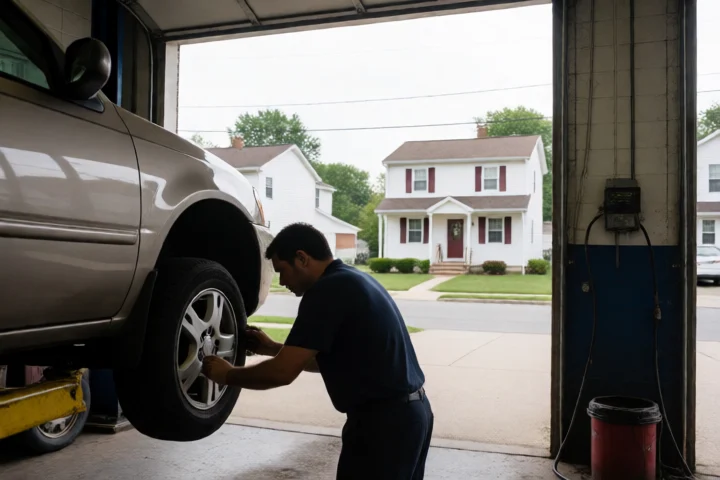
Suppose a repair shop needs $680 by Friday and the household has $230 set aside. The immediate gap is $450. If the next pay deposit leaves only $320 after essential bills, a loan requiring more than $320 on that date creates a second shortage even though it covers the repair. A lender’s larger offer does not improve that arithmetic.
A fallback belongs in this calculation too. It might be a later bill date, a partial payment accepted by the provider, assistance that reduces the expense, or a confirmed source of additional income. Without a specific fallback, the borrower is relying on a future renewal, extension, or another loan to close the next gap. That is where a short cash shortage starts repeating.
Put each offer on the same cost timeline
Small payments and short loan terms obscure the central comparison: dollars received against every dollar scheduled to leave the borrower’s account. Put each offer on one timeline, beginning with the deposit date and ending with the final payment. Enter every stated fee, each due date, and the consequence attached to a late or returned payment. Virginia’s short-term-loan rules sit in Title 6.2, Chapter 18 of the Code of Virginia, which addresses lender conduct, charges, disclosures, repayment, and related protections.
Different schedules need a common view. Add all scheduled payments for each offer, then place that total beside the cash actually received. An installment offer needs every payment counted; a single-payment loan needs the full amount due on its date. Extension or renewal terms belong on the same sheet because added fees or payments change the real cost and the end date.
| Offer | Cash Received | Total Repayment | Payment Timeline | Fees And Consequences | Exit Flexibility |
|---|---|---|---|---|---|
| Offer 1: single-payment loan | Enter the amount deposited or handed to you | Enter the one scheduled repayment amount, including disclosed charges | List deposit date and full due date | Record origination, late, returned-payment, renewal, or extension charges | Record early-payoff, cancellation, extension, and payment-change terms |
| Offer 2: installment loan | Enter the amount received after any stated deductions | Add every scheduled installment | List every due date and payment amount | Record all disclosed fees and consequences for missed or returned payments | Record early payoff treatment and any rescheduling option |
| Offer 3: renewal or extension path | Enter any additional cash actually received | Add remaining balance, added charges, and every new scheduled payment | List original due date and revised end date | Record each extension, renewal, late, or returned-payment charge | Record whether repayment reduces principal or merely moves the deadline |
Code of Virginia, Title 6.2, Chapter 18: Short-Term Loans · Payday Loans
Risks hidden by a small scheduled payment
A small scheduled payment does not answer the affordability question. The Consumer Financial Protection Bureau explains that payday loans are generally short-term borrowing tied to expected income or access to a bank account, and that a loan grows more expensive when repayment fails on the original due date. Renewal or rollover charges can extend the debt while leaving the underlying cash shortage in place.
Automatic-payment authorization deserves the same attention as the payment amount. A borrower should know the account used, the date funds are scheduled to leave it, the amount authorized, and what happens after insufficient funds. Returned-payment consequences, late charges, and collection activity belong in the offer comparison before money changes hands.
Unclear paperwork is a stop signal. Terms should identify the amount received, total scheduled repayment, dates, fees, repayment method, and rules for cancellation or early payoff. Virginia’s State Corporation Commission Bureau of Financial Institutions regulates covered consumer-finance businesses and provides licensing-related information and a complaint route for regulated institutions. A dispute involving loan terms, payments, collections, or lender conduct also has a federal complaint channel through the CFPB.
How local timing can change the decision
Linton Hall sits within Prince William County, so a household facing a food, housing, utility, transportation, or family-support gap has a county-level starting point outside the loan market. Prince William County’s Department of Human Services provides information about county human-services programs, while Virginia 211 connects residents with local health and human-service resources.
That local connection changes the borrowing calculation. A $450 repair gap remains a $450 loan question only if no other source reduces the bill. Assistance with food, utilities, housing, or transportation can free cash already committed elsewhere, while a payment arrangement can move a deadline. Program eligibility and funding vary, so current availability comes from the provider; the point is that the loan amount should reflect the remaining gap after those routes are priced.
Virginia law governs the loan terms even when the offer arrives online or through a lender outside the immediate Linton Hall area. General payday-loan descriptions from other states are poor substitutes for Virginia’s own rules. Title 6.2, Chapter 18 is the controlling statutory chapter for current Virginia short-term-loan requirements.
Alternatives to price before signing
Borrowing the full bill amount is often the most expensive response to a bill that can be reduced, divided, or delayed. Price these routes against the loan’s total repayment and due-date pressure. None promises immediate help, yet each changes the amount that must be financed if it works.
| Route | Speed | Likely Cost Category | Eligibility Friction | Risk |
|---|---|---|---|---|
| Bill payment arrangement or negotiated due date | Depends on the biller and deadline | Potentially lower than borrowing; terms depend on the provider | Requires the biller to agree to a partial payment, extension, or schedule | A missed arrangement can leave the original expense unresolved |
| Virginia 211 or Prince William County human-services support | Depends on program rules, funding, and the local provider | Assistance route rather than loan repayment | Program eligibility and application requirements apply | Support may not cover the full amount or arrive before the bill deadline |
| Participating federal credit union Payday Alternative Loan | Depends on membership and the credit union’s underwriting process | Regulated loan category with NCUA product rules | Membership eligibility and underwriting requirements apply | Availability is not universal, and repayment still needs budget room |
| Smaller loan after a bill reduction or partial payment | Depends on the lender and the reduced amount needed | Lower borrowed principal, with loan charges still applying | Requires a confirmed reduction in the original shortfall | An unconfirmed reduction leaves the borrower short at the deadline |
Three local-life stress tests
In a hypothetical Linton Hall household, a vehicle repair threatens transportation to work. The repair bill is due before payday, so the household measures the exact repair deposit against money already available. A loan payment due immediately after payday leaves too little for fuel, groceries, and the next repair installment. The repair still matters; the proposed repayment date fails the stress test.
Another hypothetical household has a utility or housing payment gap with a reliable income deposit arriving after the bill’s deadline. A call to the provider produces a partial-payment arrangement, reducing the immediate amount needed. Virginia 211 and Prince William County human-services information become relevant here because assistance with another basic expense could release money for the negotiated payment. The loan comparison changes when the gap drops.
A third hypothetical household earns irregular or seasonal income. This borrower sees enough money during a strong month, yet the proposed installments extend into a thinner month. Listing each payment on the expected-income calendar exposes the problem: repayment depends on income that has not arrived and is not certain. A shorter loan does not cure that mismatch.
A practical go-or-stop checklist
A cash loan deserves a go decision only when the records support repayment without borrowing again for the same basic expenses. These eight points turn that judgment into observable facts.
- The cash gap has a specific dollar amount after available money, partial payments, and plausible assistance routes are counted.
- The bill deadline and every loan due date appear on the same calendar as the next reliable income date.
- Income remaining after essential expenses covers each scheduled loan payment.
- The lender’s identity and Virginia licensing status are clear through the Virginia State Corporation Commission Bureau of Financial Institutions.
- Loan documents state the amount received, total repayment, every payment date, every disclosed fee, and the repayment method.
- Automatic-payment authorization identifies the account, amount, date, and the consequences of an unsuccessful withdrawal.
- Cancellation, early-payoff, extension, renewal, late-payment, and returned-payment terms are stated clearly enough to enter in the comparison timeline.
- A fallback exists for a missed payment date, and it does not depend on an assumed renewal or a second cash loan.
Consumer Finance · Code of Virginia, Title 6.2, Chapter 18: Short-Term Loans · Payday Loans