
Turn loan disclosures into a usable comparison
Compare only what is stated in writing for the specific option.
Interest, fees, and charges together cannot exceed 50 percent of the original loan amount. A disclosure showing the full payment calendar supplies a far better comparison than a headline rate alone.
| Cash Received | Repayment Schedule | All Charges | Exit Flexibility |
|---|---|---|---|
| Amount deposited or handed over | List each payment amount and due date | Interest, maintenance fee, origination or other stated charges | Partial or full prepayment terms and payoff amount |
| Amount deposited or handed over | List each payment amount and due date | Interest, maintenance fee, origination or other stated charges | Partial or full prepayment terms and payoff amount |
| Amount deposited or handed over | List each payment amount and due date | Interest, maintenance fee, origination or other stated charges | Partial or full prepayment terms and payoff amount |
Code of Virginia § 6.2-1816, Requirements for making short-term loans
Map the cash gap to a realistic payoff date
Start with the bill, not the lender’s maximum. Write down the expense, its due date, any money already available for it, and the income arriving before a loan payment falls due. The gap equals the bill due soon minus cash set aside for that bill minus other confirmed help.
Repayment needs its own arithmetic. Suppose an essential expense leaves a $300 gap due on the 12th. If $450 in take-home pay arrives on the 15th, then rent, groceries, transit, prescriptions, and existing automatic withdrawals due between the 15th and the loan payment date come off that $450 first. What remains is the credible repayment source. A fallback matters when the expected income is delayed, reduced, or already assigned to another bill; without room for that event, a new payment risks creating the next shortfall.
Local constraints that belong in the budget
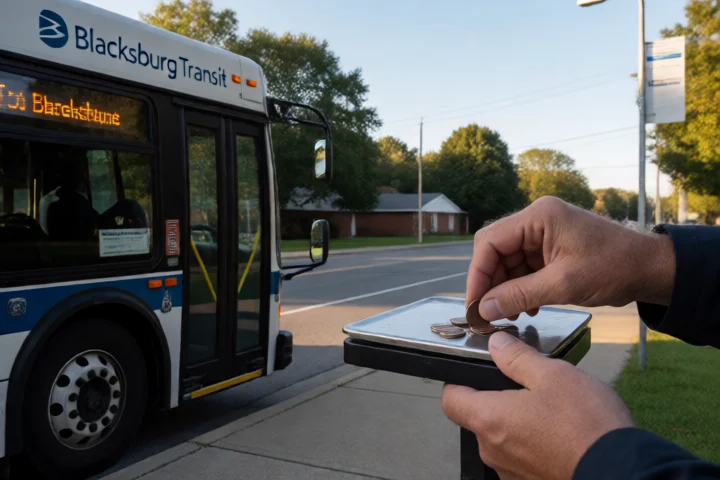
Blacksburg Transit gives a Blacksburg household a concrete way to separate a transportation need from a general request for cash. A missed ride, fuel expense, or vehicle repair should be priced against the transportation needed to reach work, classes, appointments, or essential errands. If transit covers part of that need, the loan amount changes. If a vehicle repair is the only workable route to an income shift, the payoff calendar needs to reflect the next pay date with unusual care.
Montgomery County Department of Social Services serves county residents, while 211 Virginia directs people to searchable resources for food, housing, utilities, health, and financial stability. New River Community Action serves the New River Valley. Those routes matter because assistance with one basic bill reduces the amount a household needs to finance; it also changes whether a loan payment fits.
New River Community Action · Montgomery County Department of Social Services
The failure points to identify in advance
Repeat borrowing is the central failure point. A payment that consumes money reserved for the next utility bill or groceries does not resolve the budget gap; it moves the gap forward with added charges. Virginia law addresses repayment, late charges, and collection requirements, yet the borrower still bears the immediate budget consequence when a scheduled debit meets an account with too little money in it.
Automatic payment authorization deserves separate attention. Record the account that will be charged, each debit date, the amount of each debit, and the lender’s procedure for changing payment arrangements. Unclear documents, blanks in a payment schedule, or a total repayment figure that cannot be matched to the listed installments leave no reliable basis for judging affordability. Virginia permits prepayment in full or in part without penalty on covered short-term loans, so the payoff terms should be visible before signing.
Code of Virginia § 6.2-1816, Requirements for making short-term loans
When repayment timing changes the answer
These are hypothetical Blacksburg situations, not reports about local borrowers. Their point is timing: the same loan amount produces very different pressure depending on what payment it displaces.
A hypothetical worker needs a vehicle repair to reach scheduled shifts, with wages arriving five days later.
The repair estimate, available transit through Blacksburg Transit, and the number of shifts at stake determine the actual gap. A transit option for part of the week could reduce the repair-related request, while no workable alternative makes the repair more directly tied to income.
Repayment belongs after the wage deposit and after fixed deductions already scheduled against that deposit. If the remaining money cannot cover the loan installment and routine bills, the repair still needs a smaller funding plan or another route.
A hypothetical household faces an urgent medical visit and a related travel cost shortly before rent and utilities are due.
Medical and travel expenses compete with bills that remain due after the visit. The household separates the immediate charge from the amount needed for groceries, housing, and utilities through the next pay date.
A referral through 211 Virginia or Montgomery County Department of Social Services could reduce a basic-needs portion of the gap. Financing every expense at once raises the later payment without improving the repayment source.
A hypothetical employee has reduced shift hours in one payroll cycle and expects normal hours in the next.
Expected future hours are not cash already available for a payment due in the reduced-hours cycle. The budget uses the smaller current deposit, then identifies the date and net amount of the later deposit.
A loan due before the later payroll date creates a mismatch even when the next month looks healthier. Moving a bill’s timing or reducing the underlying expense may close more of the gap than adding a payment during the thin cycle.
Check the lower-cost paths first
A cash loan is only one way to cover a shortfall, and it is often a poor first choice when the expense itself can be delayed, divided, or supported. Availability and eligibility vary, but each route changes either the amount needed now or the repayment burden later.
| Route | Speed | Likely Cost Category | Eligibility Friction | Risk |
|---|---|---|---|---|
| Bill negotiation or payment arrangement | Often tied to the biller’s response time | Potentially low or no financing cost | Depends on the biller and account status | A missed arrangement payment can leave the original bill unresolved |
| 211 Virginia, Montgomery County Department of Social Services, or New River Community Action | Program and referral timing varies | Assistance or referral route rather than loan finance charge | Programs may require household or expense information | Support may not cover the full need or arrive by the bill deadline |
| Credit-union or community financing option | Depends on application and account processes | Membership, underwriting, or account requirements may apply | Borrowing still adds a scheduled payment to the budget | |
| Licensed Virginia short-term loan | Depends on lender process and eligibility | Interest and allowed fees under the applicable terms | Application, identity, income, and lender requirements apply | A payment that outruns income can lead to repeat borrowing |
New River Community Action · Montgomery County Department of Social Services · Code of Virginia § 6.2-1816, Requirements for making short-term loans
Seven checks to complete before submitting
A loan application should follow a settled budget decision, not substitute for one.
- Match the requested amount to one identified gap after available cash and confirmed assistance are deducted; stop if the request includes an unexplained cushion.
- Locate the lender or company in NMLS Consumer Access and identify the lender’s Virginia licensing status before sharing banking details.
- Read a complete copy of the loan terms showing the amount financed, every payment amount, every due date, all stated charges, and total repayment; stop when any figure is absent.
- Place each loan payment onto the same calendar as rent, utilities, food, transportation, prescriptions, and existing withdrawals; the plan passes only when money remains for those obligations.
- Record the payment authorization, account to be debited, debit dates, and the consequences stated for late or returned payments.
- Find the prepayment and payoff language. Covered Virginia short-term loans permit full or partial prepayment without penalty, and the lender’s documents should show how payoff is handled.
Code of Virginia § 6.2-1816, Requirements for making short-term loans