
Which terms change the real cost of the loan?
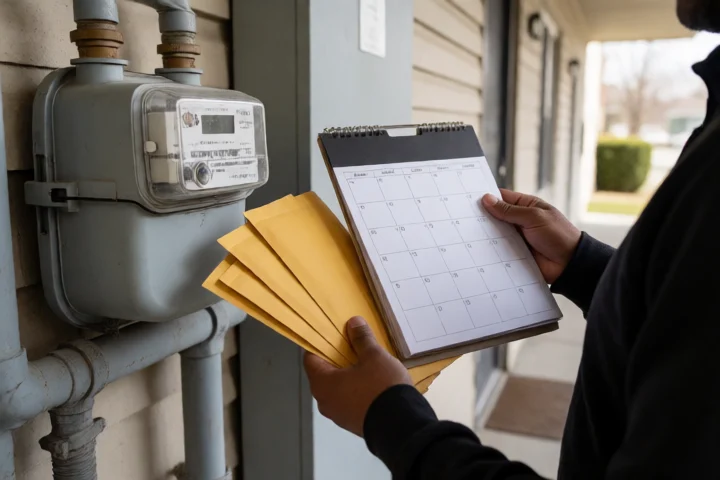
The advertised amount tells only part of the story. A sound comparison puts every offer into the same fields: cash received, total dollars repaid, the exact due date, payment pattern, every stated fee, and the terms for early payoff or trouble paying. The Consumer Financial Protection Bureau advises borrowers to compare the finance charge and repayment obligation with the amount received and the repayment date.
Offers with different schedules need one common test. Add every scheduled payment and fee to reach total repayment, then place each payment beside the income date expected to cover it. A smaller scheduled payment does not reduce the obligation if several payments add up to more than a single-payment offer.
| Offer Focus | Total Repayment | Due Date Payment Pattern | Fees And Consequences | Exit Flexibility |
|---|---|---|---|---|
| Cash received | Record the amount deposited or handed over, then total every required payment and stated charge. | Write the first due date and each later payment date, if any. | Separate the finance charge from late, returned-payment, or other disclosed charges. | Record early-payoff terms and any stated procedure for a payment problem. |
| Income-date fit | Place the full repayment beside the specific paycheck, benefit payment, or other income meant to cover it. | Mark whether the due date falls before, on, or after that income date. | Flag a shortfall that would expose the account to a stated late or returned-payment consequence. | Note whether the lender describes a payoff or repayment option before the due date. |
| Offer-to-offer comparison | Compare the calendar burden, including whether one payment or several land in the same pay cycle. | List every charge in its own column so a fee does not disappear inside a monthly budget. | Compare the written terms governing early payoff, cancellation, and payment changes. |
Separate the urgent bill from the borrowing decision
An overdue utility notice, prescription cost, or repair bill creates a deadline; it does not automatically establish the right loan amount. Start with four entries: the bill due now, cash already available for it, the shortfall, and the date of the next reliable income. Subtract available cash from the bill. That result is the gap to solve, before any lender’s offered amount enters the calculation.
Suppose an urgent bill is $340 and $125 remains after food, rent, transportation, and other committed costs. The immediate gap is $215. If the next paycheck has only $180 left after the next cycle’s committed expenses, the repayment plan already carries a $35 shortfall before finance charges. Borrowing $340 because that amount is offered would widen the mismatch.
A fallback belongs on the same page as the calculation. It might be a bill-payment arrangement, assistance request, a reduced household expense, or a decision to seek a smaller gap solution. The CFPB warns that taking a new payday loan to cover an earlier one can increase cost and extend the debt problem.
A local lens for access, work, and payment timing
Arlington borrowers use Virginia’s statewide payday-loan framework, not a separate Arlington lending code. The Virginia State Corporation Commission’s Bureau of Financial Institutions licenses and regulates payday lenders, so an Arlington applicant should identify the lender and confirm its Virginia licensing status before sharing an application. That check changes the choice from a search for a nearby name to a search for a lender subject to Virginia oversight.
Arlington County adds practical routes for shrinking the gap before debt is added. Arlington County Department of Human Services is a local point for human-services and benefits support. Food help does not pay a lender, but it can preserve cash for an urgent bill and reduce the amount that has to be repaid on the next income date.
Payment timing deserves the same local attention. An Arlington household facing a rent, child-care, medical, or transportation deadline should compare the deadline with the actual income date and with any assistance response time. A loan due before income arrives turns a calendar problem into a repayment problem.
Where a manageable payment can become a rollover
The central risk is a repayment date that consumes money already assigned to the next month’s essentials. Repeated borrowing, or a new loan used to cover an earlier loan, raises the cost and keeps the shortfall alive longer, according to the CFPB. A payment fits only when the full scheduled amount leaves enough for expenses already due before the following income date.
Automatic payment authorization deserves direct attention. Read what account access or debit authorization the lender requests, when a withdrawal is scheduled, and what the written terms say about a failed payment. Late and returned-payment consequences belong in the repayment total whenever the borrower’s account balance makes them a realistic possibility.
Unclear paperwork is a stop condition. The offer should state the amount received, finance charge, repayment obligation, due date, payment schedule, and terms for payoff or cancellation. Virginia’s Payday Loan Act contains rules on loan terms, charges, repayment, prohibited conduct, and enforcement; the statute is the governing statewide source for those rights and limits.
Test the loan against more than one outcome
These are hypothetical Arlington situations, not accounts of actual residents.
Suppose a household has a $260 child-care payment due three days before a paycheck. After rent, groceries, and transit costs, it has $160 available. The gap is $100, not $260. A loan offer due on the paycheck date still needs a second test: whether the paycheck has $100 plus the stated finance charge available after the next round of committed expenses.
If that paycheck already covers a rent contribution and a utility bill, the loan payment competes with expenses that were never optional. A payment arrangement with the child-care provider, a smaller gap solution, or local assistance that releases food money changes the arithmetic before borrowing begins.
The decision turns on the exact shortfall and the full repayment, not the size of the original child-care bill.
Suppose an Arlington resident faces an urgent medical bill of $450 after the current month’s budget is fully committed. Income arrives next week, yet the following month already includes housing, food, and transportation costs that use nearly all of it.
A payday loan that settles the medical bill now shifts its full repayment into a pay period with little unassigned cash. A provider payment arrangement or assistance route might reduce the immediate amount due, even if it does not erase the bill.
The resident needs a repayment source beyond the fact that income arrives. Without remaining cash after committed costs, a new loan to handle the first loan becomes a foreseeable pressure point.
Suppose a vehicle disruption creates a $190 repair or ride-cost gap before work shifts resume. The next paycheck is reliable, but fuel, transit, and insurance charges also draw from that same deposit.
The household compares the full loan repayment with the cost of keeping travel to work functioning through the due date. Transportation support identified through 211 Virginia could reduce the cash gap if available, while a lender’s payment schedule needs to fit the actual deposit date.
The workable amount is the smallest verified shortfall that leaves the next pay cycle able to carry its existing obligations.
Alternatives to price before signing
Price each route against the same gap calculation. Availability, eligibility, timing, and cost vary by provider, but a partial solution often changes the borrowing amount enough to change the repayment result.
| Route | Speed | Likely Cost Category | Eligibility Friction | Risk |
|---|---|---|---|---|
| Bill-payment arrangement or due-date change | Often depends on the billing company’s response and the bill deadline. | Potentially lower than a new high-cost loan; terms depend on the provider. | Account status, provider policy, and a request for revised timing. | The arrangement fails if the revised date still lands before available income. |
| Arlington County human-services or 211 Virginia referral | Depends on program capacity, screening, and the nature of the expense. | A nonprofit referral or emergency-assistance lead is not itself a payday-loan fee; compare any actual loan charge with the amount received and the repayment due date. | An Arlington borrower should confirm the lender’s Virginia license and review the requested application information before accepting a payday loan. | Support may not arrive by the bill deadline, so timing belongs in the plan. |
| Food assistance rather than borrowed cash. | ||||
| A bank-based small-dollar loan or local nonprofit assistance route may be worth comparing with a payday loan before choosing. | Depends on the institution, application process, and account relationship. | Terms vary by product and provider. | Membership, underwriting, or documentation may apply. | An offer still needs the same total-repayment and due-date test. |
| Payday loan | Terms and funding timing depend on the lender and applicant. | The CFPB describes payday loans as generally short-term and high-cost. | Lender application and Virginia licensing status require review. | A repayment date that outruns available income can lead to repeat borrowing. |
Confirm these details before sharing an application
A complete offer should survive these checks before personal or banking information changes hands.
- Identify the legal lender name and confirm that the Virginia State Corporation Commission licenses the payday lender.
- Match the cash shortfall to the urgent bill after available cash is subtracted; stop when the offered amount exceeds the documented gap without a stated need.
- Obtain the written amount received, finance charge, full repayment obligation, and every payment date.
- Place each required payment beside the income date intended to cover it; stop when committed expenses leave the payment unfunded.
- Read the terms for late payment, returned payment, early payoff, cancellation, and any payment change or hardship process.
- Read every automatic-payment or account-debit authorization and retain the written authorization terms.
- Limit application information to what the selected lender requires after its identity and written terms are satisfactory.
- Write down the fallback route for a missed income date or reduced paycheck, including the bill provider, Arlington County support route, or 211 Virginia referral that fits the expense.
Reference links
- Code of Virginia — Chapter 18: Short-Term Loans — Virginia Legislative Information System
- Should I get a payday loan if I need money now? — Consumer Financial Protection Bureau