
Define the shortfall before comparing offers
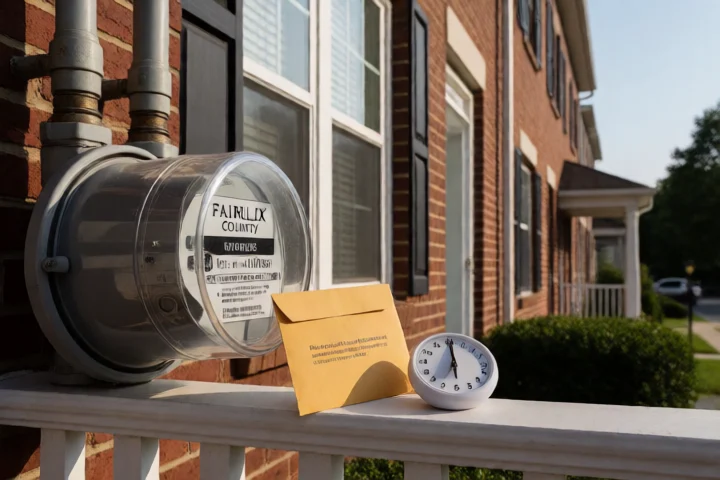
Put four figures on one line: the bill due, cash already available, the date payment is required, and income that will actually arrive before each loan payment. Subtract available cash from the bill. That difference is the gap; it is not automatically the amount a lender offers.
Suppose a $340 utility bill is due in five days and you have $140 set aside. The immediate gap is $200. A $500 loan does not solve a $200 problem cheaply just because it is offered. Virginia payday loans may not exceed $500, but the statutory ceiling is a legal limit, not a household budget.
Repayment needs its own line. If reliable take-home pay before the first payment is $700 and rent, food, transport, and existing bills consume $630, only $70 remains. A scheduled payment above that amount has no credible funding source. Put a fallback beside the calculation: a bill arrangement, a smaller expense, or local assistance. Without one, the loan depends on the next shortage disappearing by itself.
§ 6.2-1816. Maximum amount of loan; minimum and maximum terms of loan; repayment
Test the loan against more than one outcome
In one hypothetical Annandale household, a vehicle repair costs $280 and the vehicle is needed to reach paid work. The next dependable paycheck arrives before the proposed first installment, and the household’s remaining pay after core bills covers that installment. The repair has a direct income consequence, so the comparison centers on the smallest amount that gets the vehicle running and the full repayment amount.
A quote for more than $280 fails the basic test unless a separate, identified expense requires it. The borrower compares the payment dates against the actual pay date, not against a general expectation that work will continue.
That household has a narrow case for financing, provided the complete payment schedule still fits after essentials. The repair’s urgency does not make every repayment plan affordable.
In another hypothetical situation, an Annandale renter is short $350 on a utility or housing payment, while the next reliable income arrives after the payment deadline. The proposed loan begins payments before that income clears, leaving the borrower dependent on an uncertain extra shift or a second loan.
The timing mismatch is the central problem. A Fairfax County referral for basic-needs support or a payment arrangement with the biller could reduce the gap or move the deadline enough to avoid borrowing the full $350.
A payment plan that relies on uncertain income is a stop signal. The bill is urgent; the proposed repayment source is still missing.
A third hypothetical household has irregular seasonal work and needs $180 for groceries and a utility balance. Its next deposits vary in amount and date, so a lender’s scheduled payments land before the household knows what income will arrive.
Irregular income changes the test from average monthly earnings to deposits already expected on specific dates. Small scheduled payments do not fix a calendar with no firm deposits behind it.
Food or utility assistance referrals may shrink the need immediately. Borrowing before the income date is known leaves repeat borrowing as an obvious risk.
A wider choice set than one loan offer
| Route | Speed | Likely Cost | Eligibility Friction | Risk |
|---|---|---|---|---|
| Payment arrangement with the biller | Often depends on the biller’s response and deadline | Potentially lower than loan interest and fees | Account status and biller policy drive access | An arrangement that still exceeds the next income amount only postpones the shortfall |
| Fairfax County Coordinated Services Planning | Referral timing varies by program and need | Assistance or referral route; no loan charge | Program rules and available resources apply | |
| Virginia 211 referral search | Resource information is available through the statewide service | Referral route; no loan charge | Each referred program sets its own requirements | A referral does not itself pay the bill |
| Credit-union or community-finance option | Application and funding timing vary | Terms vary by provider | Membership, income, or underwriting rules may apply | A longer loan still adds a recurring payment to the budget |
| Virginia payday loan | Application and funding timing vary by lender | Interest and permitted fees add to principal | Lender underwriting and Virginia authorization matter | A payment schedule that does not fit invites repeat borrowing |
Build the decision around real local expenses
Annandale sits within Fairfax County, and that changes the comparison because county basic-needs referrals belong in the amount calculation. Fairfax County Coordinated Services Planning connects residents with information and referrals for human services and basic needs, including financial emergencies.
For a household short on rent, food, utilities, or another essential bill, that route may reduce the amount that needs financing. Virginia 211 also provides referrals for food, housing, utility, health, and other support. Those are not lender substitutes in every case, but they are relevant before a borrower turns a $200 gap into a loan balance plus charges.
Virginia law supplies the other local condition: a payday loan has a minimum term of four months and a maximum term of 24 months. That installment structure changes the comparison from “Will the next paycheck cover this?” to “Will every scheduled payment fit alongside the bills already due over the coming months?”
§ 6.2-1816. Maximum amount of loan; minimum and maximum terms of loan; repayment
A side-by-side test for competing loan terms
| Comparison Point | Offer One | Offer Two | Decision Rule |
|---|---|---|---|
| Amount received and total repayment | Record cash received and every dollar due across the full schedule | Record the same two figures | Compare repayment dollars, not principal alone |
| First payment date and final payment date | Match each date to a known income deposit | Match each date to a known income deposit | An offer fails when any payment arrives before its funding source |
| Payment frequency and amount | List each installment separately | List each installment separately | Normalize both offers into a dated payment calendar |
| Interest, loan fee, and monthly maintenance fee | List each charge and when it is assessed | List each charge and when it is assessed | Include all disclosed charges in total repayment |
| Early payoff, cancellation, and missed-payment terms | Read the contract language for each event | Read the contract language for each event | Terms need a clear answer before signing |
§ 6.2-1816. Maximum amount of loan; minimum and maximum terms of loan; repayment
Risks hidden by a small scheduled payment
A small installment can conceal a large total. At a $500 original principal balance, $8 per $100 equals $40, so the applicable monthly maintenance-fee cap is $25. Charges and payment timing belong on the same calendar.
Repeat borrowing is the serious pressure point. The CFPB describes payday loans as high-cost borrowing and warns that borrowers who cannot repay when due can enter a debt cycle. Virginia’s four- to 24-month structure does not remove that risk when one payment displaces groceries, utilities, rent, or transport.
Automatic payment authorization deserves the same attention as the rate. Read what account access the lender requests, the dates and amounts authorized, and the stated consequences of a late or returned payment. Missing, unclear, or inconsistent disclosures are a reason to stop. A storefront, advertisement, or online application does not establish authority to make Virginia payday loans; the Virginia State Corporation Commission regulates licensed payday lenders and provides licensing resources.
A practical go-or-stop checklist
- Your stated loan amount matches the remaining bill gap, not the largest amount offered.
- Every proposed payment date has a specific, reliable income deposit behind it after rent, food, utilities, transport, and existing debt payments.
- The lender appears in the Virginia State Corporation Commission’s licensing resources as authorized for Virginia payday lending.
- The written terms show the amount received, full repayment amount, payment dates, interest, loan fee, monthly maintenance fee, and late or returned-payment consequences.
- The repayment calendar covers the full term, which Virginia law sets from four to 24 months for a payday loan.
- Early payoff and cancellation terms are clear enough to price an exit if income arrives sooner than expected.
- Account-access and privacy terms identify what information and payment authorization the lender receives.
- A fallback exists if income is delayed: a bill arrangement, assistance referral, or another identified source that does not require a second payday loan.
§ 6.2-1816. Maximum amount of loan; minimum and maximum terms of loan; repayment
The records behind the details
- Code of Virginia — Chapter 18: Short-Term Loans — Virginia Legislative Information System
- What are the costs and fees for a payday loan? — Consumer Financial Protection Bureau