
Map the cash gap to a realistic payoff date
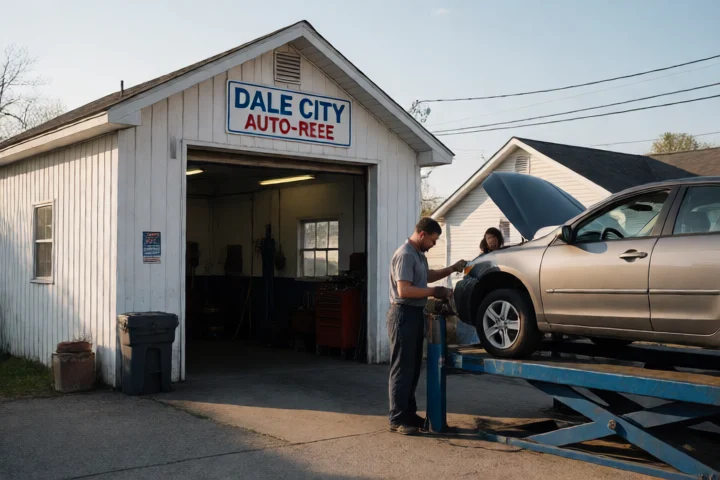
Start with the bill, not the lender’s maximum offer. Record the amount due, the due date, any cash already available for that expense, and the amount left after subtracting those funds. A $680 vehicle repair with $250 set aside creates a $430 gap; it does not create a reason to borrow $1,000 because that amount happens to be offered. The extra principal carries its own repayment burden long after the repair is finished.
Next, place each proposed payment against a dated income stream and the bills already assigned to that income. If a twice-monthly payment falls three days before wages arrive, the calendar matters even where the monthly payment appears manageable. A credible repayment source is specific: wages expected on a stated date, a known benefit payment, or funds left after rent, food, utilities, transportation and existing debt obligations. “I’ll make it work” is a sentiment, not a funding source; lenders have heard it before, and calendars remain unmoved.
Leave room for a fallback. That means identifying what covers the payment if expected income arrives late or a routine expense rises. A loan whose first payment already consumes the remaining cash after essential bills turns a one-time gap into a recurring one. This calculation also reveals when reducing the bill through a payment arrangement or assistance referral makes more sense than financing the whole balance.
Local constraints that belong in the budget
Dale City households use Prince William County resources for public-assistance screening and community-service referrals. That changes the borrowing calculation when the gap involves food, utilities, housing, health care or family-support costs: the amount needing finance may shrink if county assistance or a community referral addresses part of the underlying bill. Prince William County Department of Social Services serves as the county entry point for social-services and public-assistance programs, while Coordinated Services Planning connects residents with available community services.
Virginia’s loan categories also affect what belongs on the comparison sheet. Consumer finance companies operate under the Consumer Finance Act, while short-term lenders fall under a separate chapter of Virginia law. A Virginia short-term loan is defined, subject to the chapter’s conditions, as a loan of $2,500 or less lasting at least four months and no more than 24 months. Scheduled payments therefore do not identify the legal category on their own.
For short-term loans, Virginia caps interest at 36 percent annually and permits a monthly maintenance fee no greater than the lesser of 8 percent of the originally contracted loan amount or $25, subject to statutory conditions. That fee structure makes the payment schedule and total repayment central to the decision. Consumer-finance-company rate rules are tiered by portions of principal: 36 percent on the portion through $1,400, 21 percent on the portion above $1,400 through $2,000, and 11 percent on the portion above $2,000. Those figures are not one flat rate applied across every dollar borrowed.
Put each offer on the same cost timeline
Federal closed-end credit disclosures provide the common fields for this comparison: annual percentage rate, finance charge, amount financed, total of payments, payment schedule and late-payment information. Put every offer into the same timeline before judging the size of a single payment. A weekly payment and a monthly payment are different calendar commitments even when their advertised amounts look close.
| Amount Financed | Payment Timeline | Total Repayment | Fees And Late Terms | Exit Flexibility | Offer |
|---|---|---|---|---|---|
| Copy the disclosed amount financed | List every due date and payment amount | Copy the disclosed total of payments | Record finance charge, maintenance fees if shown, and late or returned-payment terms | Record early-payoff and cancellation terms | |
| Copy the disclosed amount financed | List every due date and payment amount | Copy the disclosed total of payments | Record finance charge, maintenance fees if shown, and late or returned-payment terms | Record early-payoff and cancellation terms | |
| Copy the amount available for the actual gap | List every due date and payment amount | Copy the disclosed total repayment | Record all stated charges and missed-payment consequences | Record whether extra payments or early payoff change the final cost | Offer C or a credit-union option |
Shortfall scenarios with different exit paths
Different expenses produce different repayment tests. These hypothetical Dale City situations show why the bill’s timing and the source of repayment need to lead the decision.
Suppose a Dale City worker needs a $430 car repair to keep transportation available for work. The next paycheck arrives in eight days, and the repair shop accepts a partial payment now with the remainder due after that paycheck.
The cash gap lasts eight days, while an installment loan creates payments that extend beyond that short period. A partial-payment arrangement could reduce the amount financed or remove the need for a loan.
Borrowing becomes more defensible only if the repair balance cannot be timed to wages and the first scheduled loan payment still fits after the next round of essential bills.
Suppose a household has a utility or housing-related balance due before its next reliable income date, while one household member has irregular seasonal work and cannot count on the next assignment.
Expected income from irregular work does not support a fixed payment schedule in the same way as confirmed income. County assistance screening or Coordinated Services Planning could identify support that reduces the bill before debt is added.
The repayment plan should rest on the reliable income date, not on hoped-for work. If that income cannot carry the scheduled payment after essential expenses, the gap has not been solved; it has been moved.
Compare borrowing with non-loan routes
A loan is one route to a shortfall, not a measure of whether the expense deserves attention. Payment arrangements and assistance often address the amount due directly; a credit-union small-dollar product, where available, supplies a separate borrowing benchmark. Federal credit unions may offer Payday Alternative Loans under the National Credit Union Administration framework, though eligibility and availability vary by institution.
| Route | Speed | Likely Cost Category | Eligibility Friction | Risk |
|---|---|---|---|---|
| Installment loan | Depends on lender review and funding process | Interest and disclosed finance charges; some Virginia short-term loans also involve permitted maintenance fees | Application and lender underwriting | Fixed payments can strain later pay periods and lead to repeat borrowing |
| Bill payment arrangement | Depends on the biller’s response | Often lower than financing, though the biller’s terms control | Requesting and qualifying for a revised due date or split payment | Missed arrangement terms can leave the original balance unresolved |
| Prince William County assistance or referral | Varies with program and household circumstances | No loan interest | Screening, documentation or referral requirements | Help is not assured and may not cover the entire expense |
| Participating credit-union small-dollar option | Depends on membership and institution process | Potentially a lower-cost borrowing comparison | Membership and product requirements | Availability and terms differ by credit union |
Risks hidden by a small scheduled payment
Small scheduled payments conceal the full obligation when the borrower sees only the next due amount. Total repayment shows what leaves the household over the loan’s full term; the payment schedule shows when it leaves. Repeated borrowing after one loan ends is a signal that the budget never had room for the original payment, and each new balance brings a new repayment calendar.
Automatic payment authorization deserves the same attention as the rate. A borrower should know the account used for payments, the dates and amounts authorized, and the stated consequences of a late or returned payment. Unclear disclosures, missing total-repayment figures, or terms that do not match the discussion are reasons to stop before applying. Virginia’s State Corporation Commission Bureau of Financial Institutions is the state authority for licensing and supervision of covered nonbank financial-service providers; the Consumer Financial Protection Bureau accepts complaints about lending issues.
A final checklist before you apply
A sound application decision has observable answers, not assumptions about what the payment will feel like later.
- Write the exact expense, amount due and deadline; stop if the requested loan exceeds the remaining gap.
- Match every proposed payment date to a reliable income date and essential bills; stop if any payment depends on uncertain income.
- Identify the lender and confirm its Virginia licensing or supervisory status through the State Corporation Commission Bureau of Financial Institutions.
- Read the closed-end disclosures for the annual percentage rate, finance charge, amount financed, total of payments, payment schedule and late-payment terms.
- Add every scheduled payment to confirm the disclosed total repayment and compare that figure across offers.
- Read cancellation, early-payoff and extra-payment terms before signing, then retain the terms provided.
- Identify any automatic payment authorization, the account involved, the authorized dates and the stated returned-payment consequences.
- Name a fallback route for the underlying expense, such as a bill arrangement, Prince William County assistance screening or Coordinated Services Planning.
Bureau of Financial Institutions · Department of Social Services
The records behind the details
- Code of Virginia, Title 6.2, Chapter 18: Short-Term Lenders — Virginia Legislative Information System