
What the local setting changes—and what it does not
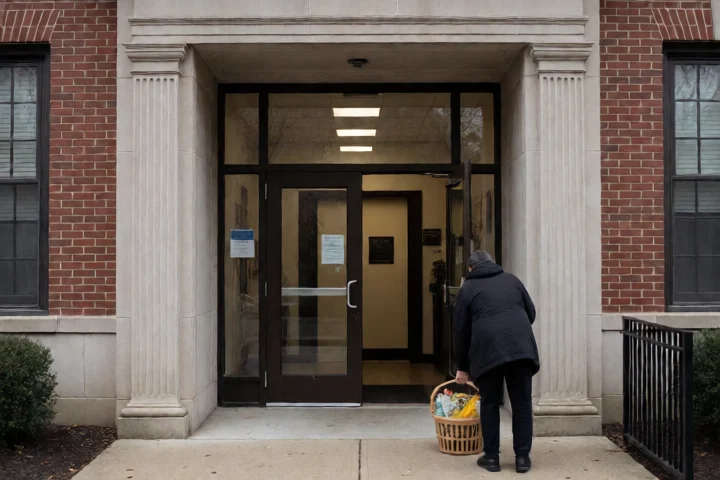
Ashburn sits within Loudoun County’s countywide assistance network, and that changes the first comparison when a cash need is tied to a particular bill. A household facing an unpaid utility bill, a rent gap or a food expense has reason to see whether that bill qualifies for help before financing every dollar as unrestricted cash. 211 Virginia also connects households with food, housing, utility, health, transportation and other community resources across the state.
Loan terms themselves follow Virginia law, not an Ashburn-specific schedule. Under Virginia’s Short-Term Loan Act, covered short-term loans generally range from $100 to $2,500 and run from four to 24 months. Lenders making those loans in Virginia require a State Corporation Commission license. That license status belongs near the start of an offer comparison, because an offer operating outside the state’s covered lending framework presents a different problem from one whose payment schedule and charges are disclosed under it.
Virginia State Corporation Commission, Bureau of Financial Institutions — official information · Loudoun County Coordinated Services Planning
Define the shortfall before comparing offers
Cash loans work best as a calculation, not a category. Start with the bill due before the next reliable income date, subtract cash already available for that bill and subtract any confirmed outside help or payment extension. The result is the cash gap. A person with a $740 repair invoice, $300 set aside and a confirmed $140 contribution has a $300 gap; a lender’s larger offer does not turn the gap into a larger need.
That number needs a second line: money available on each expected pay date after rent, groceries, utilities, transportation and other committed expenses. If $125 remains after those obligations on the first pay date and $125 on the second, a proposed payment schedule demanding $180 at either point does not fit the household’s actual calendar. A fallback matters as well. It identifies what happens if expected income arrives late or falls short, before a missed payment forces the decision.
Scenario checks before choosing a loan
Three hypothetical Ashburn situations show why the same loan amount produces different consequences.
Suppose an Ashburn worker needs a $480 vehicle repair to keep getting to work. Their next two paychecks leave $160 after essential bills. A three-payment offer requiring $190 in each period would consume more than the available margin, even though the repair itself protects income.
Transportation makes the repair urgent, but it does not create room in the repayment calendar. The comparison turns on whether payments fit the $160 margin or whether the repair shop offers a partial payment arrangement that reduces the amount financed.
A smaller gap, a later bill date or a payment schedule aligned with the two paychecks preserves more room for fuel, food and an unexpected expense after the repair.
Suppose a household has a $260 utility gap due before a reliable income deposit arriving in ten days. The household expects enough income to cover the bill after that deposit, yet a loan would carry payments over several months.
Loudoun County Coordinated Services Planning and 211 Virginia are relevant because the need concerns a named household bill, not general spending. Referral or emergency assistance could reduce the $260 shortfall, while a utility payment arrangement could change the deadline.
Borrowing only the uncovered portion keeps the loan tied to the remaining gap. Financing the whole bill after assistance or a payment arrangement is available would leave the household repaying cash it no longer needed.
Suppose an Ashburn household relies on irregular seasonal work and needs $700 for housing-related expenses. Income is expected during the next month, but no exact deposit date is known.
A repayment plan based on an uncertain date has no dependable first payment source. Larger future earnings do little for a payment due before those earnings arrive; calendars are annoyingly literal that way.
The household needs a payment date supported by confirmed income, a bill arrangement or assistance that reduces the immediate gap. An offer with a fixed schedule leaves little room to recover when the expected work date moves.
Compare the full repayment, not the headline amount
Every offer belongs on the same calendar. List the amount received, every scheduled payment, each payment date, the origination charge, monthly maintenance charge, interest, late or returned-payment consequences and early-payoff terms. Add the payments to reach scheduled repayment. That dollar figure reveals more than the amount deposited.
Virginia permits covered short-term-loan interest up to a simple annual rate of 36 percent, an origination fee up to the lesser of 8 percent of the original loan amount or $150, and a monthly maintenance fee up to the lesser of 8 percent of the original loan amount or $25. On a four-month $1,000 loan, those ceilings produce up to $80 in origination charges, $100 in four monthly maintenance charges and $120 in simple interest, for $1,300 scheduled repayment. A contract often charges less than statutory ceilings, which is why the actual payment schedule remains the comparison document.
| Scheduled Repayment | Payment Dates | Charges Shown | Exit Flexibility |
|---|---|---|---|
| Sum every listed payment | Record each due date beside expected income | Interest, origination fee and maintenance fee listed separately | Record early-payoff terms and any remaining fees |
| Sum every listed payment | Record each due date beside expected income | Interest, origination fee and maintenance fee listed separately | Record early-payoff terms and any remaining fees |
| Sum every listed payment | Record each due date beside expected income | Interest, origination fee and maintenance fee listed separately | Record early-payoff terms and any remaining fees |
Virginia Code § 6.2-1818, Interest; fees; prohibited practices
Watch for terms that remove your room to recover
A loan becomes fragile when every expected dollar already has a job. Repeat borrowing to cover an earlier payment, a due date that arrives before reliable income, or a payment that absorbs the money reserved for essentials are signs that the original gap has turned into a continuing obligation. Late-payment and returned-payment terms deserve the same attention as the ordinary payment because those events are precisely when a household has the least room to absorb another charge.
Automatic payment authorization deserves a separate reading. The agreement should state the account used, payment amount, timing, how authorization works and the process for ending or changing it. Unclear charges, missing payment details or terms that remain unavailable until after a decision leave no sound basis for comparison. Problems involving a lender or servicer’s conduct belong with the Consumer Financial Protection Bureau; deceptive or unfair marketplace conduct also falls within the Virginia Attorney General Consumer Protection Section’s complaint channel.
Options that may lower the amount borrowed
A smaller cash gap changes every later loan calculation. Some routes address the bill’s timing, some cover part of the expense and some offer financing through another provider. Availability, eligibility and response time vary, so each route needs an answer tied to the actual bill deadline.
| Route | Speed Pattern | Likely Cost Category | Eligibility Friction | Effect On Cash Gap |
|---|---|---|---|---|
| Bill payment arrangement | Depends on the biller and due date | Often lower than new borrowing when accepted | Biller rules and account status apply | Moves or divides the expense |
| Loudoun County Coordinated Services Planning | Depends on program review and available assistance | Assistance or referral route | Program requirements apply | May address part of an emergency bill |
| 211 Virginia referral | Resource connection begins through the service | Assistance and community-resource route | Each referred program sets its own rules | May identify food, housing, utility or transportation support |
| Credit-union or community financing option | Depends on the provider’s process | Provider-specific financing cost | Membership, underwriting or program rules apply | Offers another source for the remaining balance |
Use this checklist to make the decision explicit
A decision is ready for comparison when each point below has a clear answer on paper or screen.
- The expense amount, due date and remaining cash gap are stated in dollars.
- A reliable income source covers every scheduled payment after essential household expenses.
- The lender’s Virginia State Corporation Commission license status is identified for a covered Virginia short-term loan.
- The offer shows the amount received, every payment date, total scheduled repayment, interest and each fee.
- Origination and monthly maintenance charges are included in the repayment calculation.
- Late-payment, returned-payment, early-payoff and cancellation terms are available before acceptance.
- Automatic payment authorization identifies the account, amount, timing and change or cancellation process.
- A fallback exists if income is delayed, including a bill arrangement, assistance route or another plan that does not depend on repeat borrowing.
Virginia State Corporation Commission, Bureau of Financial Institutions — official information · Virginia Code § 6.2-1818, Interest; fees; prohibited practices