
Match the bill to the assistance category
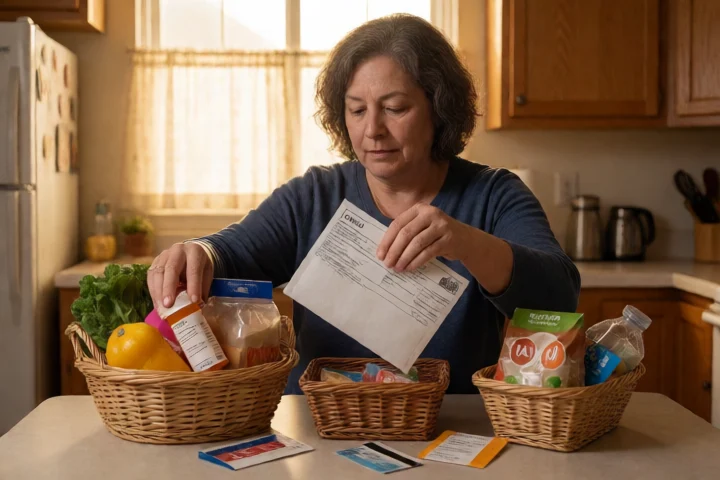
In a clearly illustrative Virginia household, a reduced work schedule leaves five separate problems on the kitchen table: a thin grocery budget, overdue rent, a utility notice, a prescription expense, and no reliable ride to an appointment. Those problems do not travel through one universal assistance channel. Food needs belong with food-assistance routes; rent, eviction risk, and shelter costs belong with housing assistance; electric, gas, water, or heating bills belong with utility assistance. Medical coverage and out-of-pocket care point toward health-care assistance, while bus fare, fuel, vehicle access, or rides to necessary services point toward transportation help.
That split matters because each route screens for the cost it is built to address. A household facing a grocery shortage needs its food situation described clearly; a household trying to keep housing needs rent, arrears, or shelter circumstances at the center of the request. Health information belongs in a health-related application when it affects eligibility or the service sought, not as loose paperwork attached to every request. Bureaucracy has many hobbies, but reading minds is not one of them.
Some problems also end at a local-government or nonprofit referral. Housing crises and transportation gaps in particular can depend on locally administered services, community funding, or a provider in the household's area. A statewide application route remains relevant for statewide programs, while a local referral fits a need handled closer to home.
Verify the current Virginia route before applying
Reliable applications begin with the current official Virginia agency or program page. That page identifies the program's purpose, the administering organization, and the application channel it recognizes.
- Start at the current official Virginia agency or program page and note the page date, web address, and listed contact method.
- Confirm the locality rules and household conditions attached to the specific food, housing, utility, health-care, or transportation route.
- Follow the accepted application channel shown by the administering agency, whether that route uses an online form, phone contact, mail, an office, or a verified partner.
- Match any outside organization or phone number to the contact information supplied through the official Virginia source before sharing application details.
Prepare documents without assuming approval
Screening usually turns on a household's actual circumstances, so records need to show who lives together, where they live, what income enters the household, and which essential cost is at issue. Programs control their own requirements and ask for records that fit their eligibility rules.
- Identity records for the applicant and, where requested, household members.
- Virginia residence records, such as documents showing the current address.
- Household details, including the people who live together and their relationship to the application.
- Income records covering earnings and other household income.
- Essential-expense records tied to the request, including rent, utility bills, medical costs, or transportation expenses.
- Account numbers, case numbers, notices, and other records connected to the bill or prior assistance request.
- Disability or health information when it is relevant to the health-care service or eligibility review.
- Records of earlier applications, notices, or decisions when the household has already sought help.
Plan for processing, renewal, and a denial
Processing creates a second calendar after an application is filed. Confirmation numbers, submission dates, names of contacted offices, and copies of uploaded or mailed records give the household a way to follow the file when more information is requested. A waitlist or a processing period does not erase an immediate bill, so the household in the earlier example would keep the rent, utility, food, medical, and transportation problems separated while each request moves on its own timeline.
Renewal deadlines deserve the same attention as the original application. Continuing help often depends on updated household and income information, and a missed request for verification can interrupt a case. When an application is denied, the written reason identifies the decision being challenged or corrected. Current program review or appeal instructions then govern the next response, including any deadline and requested supporting material.
Avoiding paid gatekeepers and copied application sites
Copied application sites often borrow the language of public benefits while inserting a fee, a sales pitch, or a promise of guaranteed help. A demand for payment to obtain access to a public benefit application is a warning sign, as are pressure tactics and guarantees of approval. Eligibility decisions rest with the administering program, not a company selling a shortcut.
Credentials deserve the same scrutiny. An application route has a reason to request information connected to identity, household status, income, residence, or the bill at issue. Requests for unrelated passwords, unnecessary financial credentials, or details beyond the application should stop the process until the website domain or phone number matches an official Virginia source. The official contact path recorded earlier supplies the cleanest way back to the real program.